
Paint can cling harder than it looks. On brick, that bond can reach into pores, mortar edges, and textured surface pockets. Knowing how to remove paint from brick starts with understanding that the wrong method can scar the masonry, erode joints, or leave behind paint residue that becomes harder to correct later.
Can Paint Be Removed From Brick?
Paint can often be removed from brick, but the result depends on the surface condition, the coating, and how deeply the paint has penetrated. Brick is porous, so paint may not sit only on the face of the material. It can lodge in pores, grip surface texture, and collect along mortar joints.
That is why the first answer to how to remove paint from brick is conditional. A newer, harder brick with a single coating may respond differently than soft historic brick with several layers of old paint. Complete restoration to the original appearance is not always guaranteed, and some brick may retain shadowing, staining, or color variation after removal.
Why Paint Bonds So Tightly To Brick
Brick absorbs moisture and coatings through its pores. When paint is applied, some of the coating can move into the surface instead of staying as a film on top. Once it cures, the coating may grip the brick face and the tiny openings below it.
Mortar adds another variable because it is usually softer and more absorbent than brick. Removal pressure or strong chemistry can affect the joints before the paint fully releases, especially when mortar is old, eroded, or previously repaired. The same porous-surface logic applies to paint removal from concrete, where coating type, surface condition, and removal method must be considered together.
Why Property Owners Remove Paint From Brick
Paint removal usually starts with a surface problem or restoration goal. Some owners want to uncover historic masonry or correct peeling, blistering, or incompatible coatings.
Brick paint removal may also be part of repair preparation because repointing, patching, or masonry cleaning can require access to brick and mortar rather than a painted film. Red brick does not require a separate universal method simply because of color; coating type, brick porosity, mortar condition, age, and restoration goals still control the removal approach. Graffiti and spray paint may cover only part of the surface, but the pigment can settle into textured brick and spread across mortar joints, so the surface should guide the next decision.
How To Remove Paint From Brick Starts With Surface Condition
The best way to approach how to remove paint from brick is to start with diagnosis. The remover and cleaning method should match the coating, brick condition, mortar condition, and final restoration goal.
The brick should be evaluated for age, hardness, surface texture, cracks, spalling, and moisture exposure, while mortar should be checked for softness, open joints, erosion, or previous repair work. Latex paint, oil-based paint, elastomeric coatings, graffiti, and unknown older coatings may respond differently to removers. A small test area helps confirm whether the product softens the coating, how the brick reacts, and whether the mortar can tolerate the process, while also setting realistic expectations for residue, staining, and final appearance.
Common Paint Removal Approaches For Brick
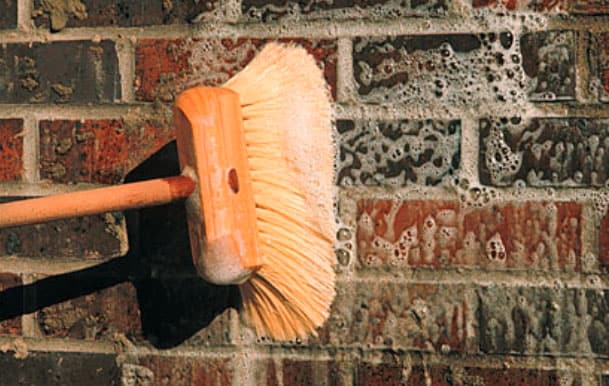
Most paint removal from brick falls into a few broad categories. The right choice depends on the coating, masonry condition, surrounding materials, and restoration goal.
Chemical Paint Removers
Chemical strippers and paint removers can soften coatings before scraping or rinsing. For brick, the product must be compatible with masonry and strong enough for the coating without being unnecessarily aggressive to the surface. Professional-grade paint removers give contractors and restoration teams options for different coating and substrate conditions.
Extended-contact removers may be useful where coatings are thick or layered. These products need proper dwell time to work, and manufacturer instructions should guide dwell time, removal procedure, and cleanup requirements.
Masonry Cleaners
Masonry cleaners may be used after paint is loosened or removed to address residue, staining, or remaining contamination. They are not interchangeable with paint removers because products made for soil or construction residue may not dissolve cured paint.
Many brick projects involve both coating removal and follow-up cleaning. Once the paint releases, remaining residue determines whether a masonry cleaner is needed.
Restoration Methods
Restoration professionals may combine removal products, gentle scraping, controlled rinsing, and follow-up cleaning. The process should protect the hard outer face of the brick and the mortar joints. On older buildings, preserving the original surface may matter more than removing every trace of paint in one aggressive pass.
The site conditions set the limits for the removal plan. Product instructions, safety requirements, containment, temperature, ventilation, runoff control, and surrounding materials all affect the work.
How Spray Paint And Graffiti Change The Process
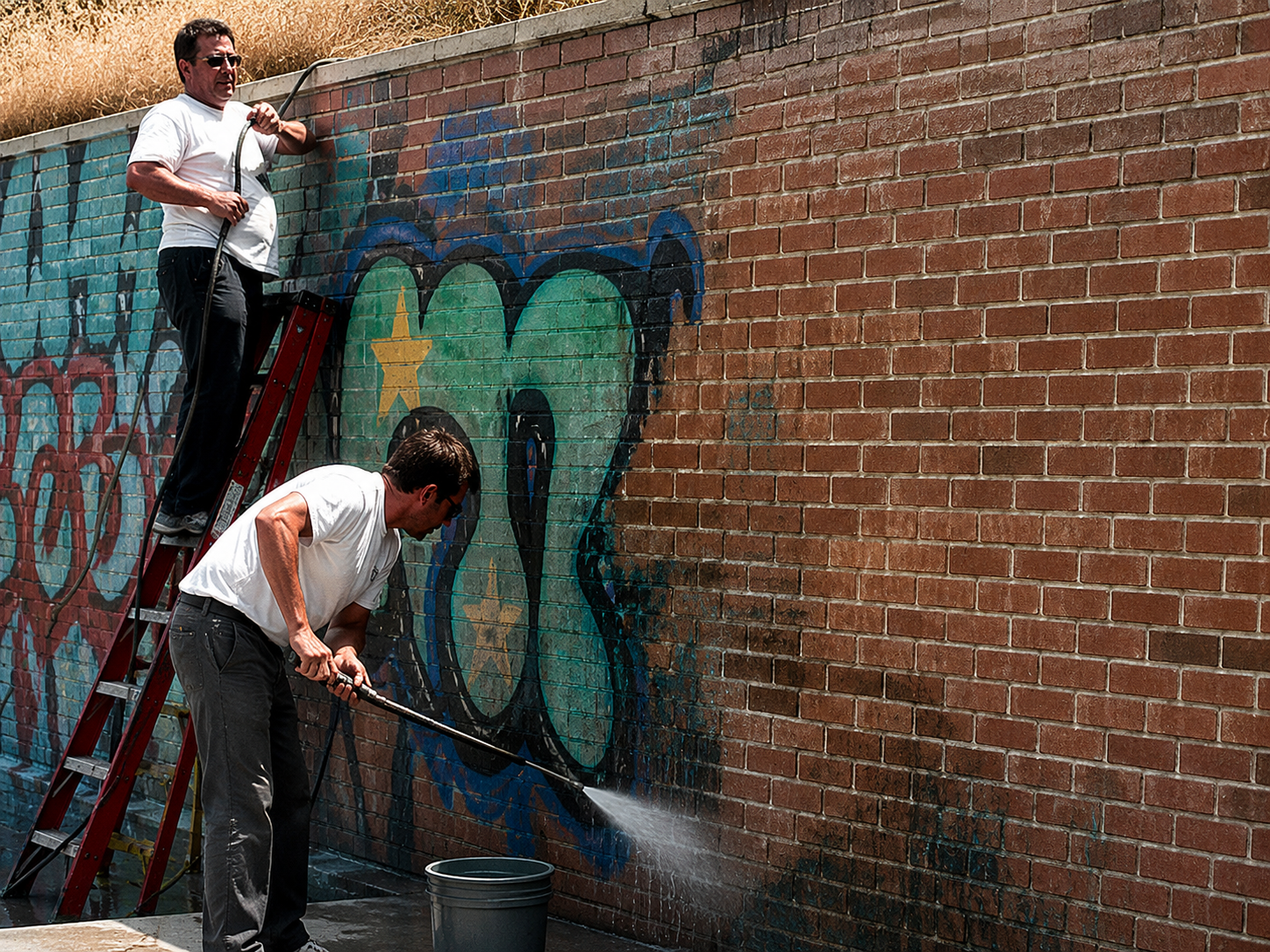
Spray paint and graffiti often require a more targeted approach than full-wall coating removal. Spray paint may sit in a thinner layer, but it can still grip textured brick and mortar, and overspray can leave a wider stain pattern than the visible mark suggests. Full-wall paint stripping and spot graffiti removal place different demands on the surface because one usually involves coating removal across a larger area, while the other focuses on targeted marks, surrounding staining, and substrate-safe cleanup.
On porous or textured surfaces, graffiti removal depends on matching the marking material, substrate, and cleanup method. Graffiti Remover is a targeted option for spray paint and magic marker when the marking type and substrate match the product directions. That product fit matters when the job involves how to remove spray paint from brick rather than stripping an entire painted wall.
Common Mistakes That Damage Brick And Mortar
Most damage happens when removal force exceeds what the masonry can tolerate. Brick can look solid from a distance, but the surface may be weathered, soft, cracked, or already weakened by moisture. Mortar joints may be even more vulnerable.
Common mistakes include:
- Aggressive sandblasting that scars the brick face
- Excessive pressure washing that erodes mortar joints
- Wire wheels or grinders that cut into the masonry
- Harsh acids, cleaners, or stripping products not intended for brick or masonry conditions
- Skipping the test area before treating the full surface
These mistakes can create permanent changes. Once the hard outer face of brick is damaged, the wall may absorb more water and soil more easily. Once mortar is eroded, the wall may need repair before cleaning or coating work continues.
How To Remove Paint From Brick Exterior Surfaces
Exterior brick adds weather, drainage, containment, and access concerns to those surface risks. Sun, wind, temperature, and moisture can change how a remover behaves, including how quickly products dry or rinse.
Exterior work also creates runoff concerns. Paint residue, stripper, rinse water, and loosened coating material must be controlled according to project conditions and product requirements. Exterior wall projects should account for containment, access, adjacent materials, wall height, and mortar condition before focusing on the coating itself.
How To Remove Paint From A Brick Fireplace Or Interior Brick
Interior brick surfaces, including fireplaces, need a different level of care. Ventilation, odor, residue control, adjacent finishes, soot, and smoke staining can all affect cleaning after paint removal.
Indoor brick still needs a product matched to the brick, mortar, coating, and location. Harsh abrasion can damage a fireplace surround, exposed brick wall, or smaller masonry feature even when the painted area looks manageable.
Choose Products Compatible With Brick And Mortar
Product compatibility is the center of safe paint removal from brick. A strong product is not automatically the right product. The remover must be appropriate for the coating, the brick surface, the mortar condition, and the surrounding materials.
A safe answer to how to remove paint from brick starts with what needs to be removed, what needs to be preserved, and what damage must be avoided. Multiple paint layers may need more dwell time, while isolated graffiti may need targeted removal. Compatibility testing confirms whether the remover works, whether the brick changes color, whether mortar softens, and whether residue remains after rinsing or cleaning.
When Professional-Grade Masonry Products Make Sense
Professional-grade masonry products are warranted when brick is historic, highly visible, heavily coated, difficult to replace, or already deteriorating. In those cases, product selection and testing can prevent a cleaning project from becoming a masonry repair project.
Contractors and restoration professionals also need predictable product categories. A full-wall coating removal job, graffiti cleanup, and post-removal masonry cleaning may require different materials. For property owners, professional guidance becomes especially important when the painted area is large or the first test area shows staining, soft mortar, or uneven release.
Work With PROSOCO For Masonry Paint Removal And Restoration Products
Paint removal, masonry cleaning, and surface restoration require products matched to the coating and substrate. PROSOCO provides professional-grade options for contractors, restoration teams, property managers, and building owners working with masonry surfaces. Contact us today for more information.