Oil rarely stays on top of concrete. Once it reaches the pore network, it bonds to the cement surface and resists simple surface cleaning. Anyone trying to learn how to remove oil stains from concrete must first determine whether the contamination sits on the surface or deeper in the slab, because each condition responds to different chemistry.
Why Oil Stains Stick to Concrete
Most driveways and garage slabs show both kinds of staining at once: fresh drips of oil that still sit on the surface and older halos left by years of slow leakage. Washing the entire area with a single cleaner delivers uneven results, because surface films respond quickly while deeper contamination stays in place.
Cleaning stays predictable when the slab is divided into zones based on stain depth rather than color alone, so that remains the most reliable way to remove oil stains from concrete on real driveways and garage floors.
Surface Preparation Before Cleaning
Before any product goes down, loose debris has to come up. Dust, sand, and organic material block any oil-removing material from coming into direct contact with the concrete, keeping oil pinned to the surface. Clearing the slab exposes the pores, cuts down on extra cleaning cycles, and leaves the driveway ready for an oil-removing treatment.
Several field conditions affect how deeply oil travels and how well cleaning products work:
- Temperature: Warm slabs expand slightly and open the pore structure, improving penetration for both oil and cleaners. Cold slabs contract, slow reactions, and reduce how quickly stains respond to chemistry.
- Moisture: Damp concrete dilutes surface cleaners and interferes with extraction products as they cure. On the other hand, dry and moderate conditions support the most reliable and repeatable lift.
- Geometry and drainage: Low spots collect water and oil, and standing moisture pushes hydrocarbons deeper into the concrete. High-traffic paths where vehicles turn or track residue are likely to develop thin smears that clear quickly with detergent.
Recognizing these patterns lets contractors and homeowners match cleaning chemistry and dwell time to the way each slab actually behaves.
Cleaning Surface Oil Versus Embedded Oil
Surface cleaning uses detergents that break the bond between petroleum residue and concrete. When the detergent wets the film and brushing drives the chemistry into the texture, it disrupts the tension holding the oil in place. Once the film releases, it can be moved off the slab without spreading it across cleaner sections. Thin drips and tracking marks respond the same way and are usually the quickest part of the job.
The chemistry changes once oil penetrates below concrete’s surface.
- Detergents cannot reach hydrocarbons that have migrated into the pores, so deeper stains often leave a returning shadow as the slab dries.
- Extraction products enter the pores as liquids, cure in place, and contract to draw oil upward so it can be removed.
This mechanism is at the core of how to remove oil stains from concrete when hydrocarbons have already settled below the paste layer, and it behaves predictably when dwell and dry-down times are respected.
Rinsing and Runoff Control
Rinsing controls the final result as much as the cleaning chemistry. Even when detergents break the oil apart, poor rinsing can redeposit contamination across clean sections of the driveway. A controlled rinse follows the natural slope of the slab and moves suspended material off the surface instead of spreading it sideways. The rinse water has to leave the slab instead of circulating across it.
Detergent Cleaning for Surface Films
For fresh films, light drips, and widespread tracking, a dedicated concrete detergent helps break the surface bond and move residue off the slab. PROSOCO Cleaner/Degreaser provides the detergent action needed to cut oily buildup on driveways, garages, and other concrete flatwork without relying on harsh acids or caustics.
PROSOCO’s range of oil removers for concrete covers both surface films and deeper staining, with Cleaner/Degreaser handling surface buildup and tracking before it has a chance to soak deeper into the slab.
Extraction for Embedded Oil Stains
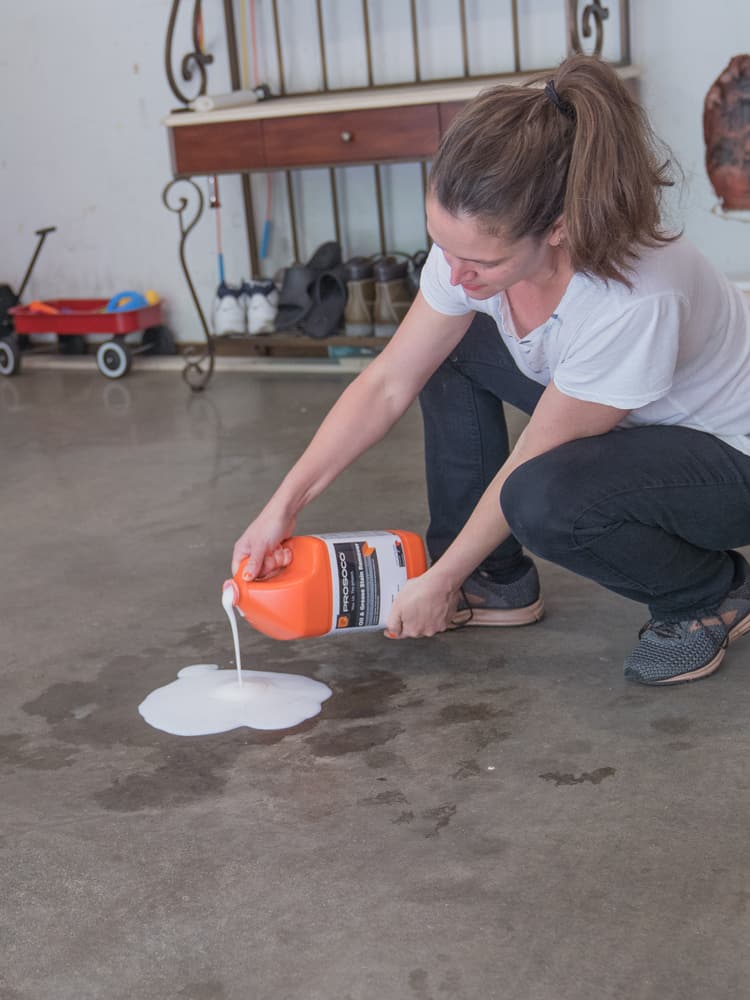
Once hydrocarbons are in the pores, the cleaner has to behave more like a poultice than a simple detergent. Extraction products enter as liquids, cure in place, and pull oil toward the surface in a controlled lift. For deep, matte staining that returns after basic cleaning, PROSOCO Oil & Grease Stain Remover is formulated to handle embedded contamination in driveways, garages, and other concrete slabs. It’s designed specifically for grease stains in concrete driveways and slabs, where oil has already entered the pores and ordinary detergents cannot reach it.
Dry-Down Evaluation Between Cycles
Once the first cleaning cycle is complete, evaluation has to wait until the surface dries. Wet concrete can mask what remains, but as moisture evaporates, any remaining hydrocarbons migrate upward and darken the surface; that’s normal behavior on older slabs.
It’s not a new stain, it’s the original contamination rising through the pores. If a shadow returns after drying, an additional extraction cycle is appropriate, and contractors and homeowners can rely on the same cues when learning how to remove oil stains from concrete and how to get oil off driveway surfaces that have absorbed residue over time.
Deep Oil Stains and Multi-Cycle Extraction
Deeper staining from slow, repeated leaks often requires more than one extraction cycle.
- The thickest deposits beneath a long-term drip can sit deeper in the slab than the surrounding halo.
- With each cycle, the stain lightens until it blends with the rest of the driveway.
- The goal is not to scrub the slab clean; it’s to let the extraction chemistry draw hydrocarbons upward in controlled phases.
Heavy discoloration responds reliably when dwell times and drying conditions are respected. Spot treatment avoids unnecessary product use and focuses effort where the slab is still releasing oil. As extraction cycles progress, the slab reveals how much contamination remains. A uniform dry-down pattern usually indicates that most hydrocarbons have been removed, while areas that dry slowly or show faint, irregular shadows signal deeper pockets of residue.
Here are some common signs that deeper contamination remains:
- Shadows that return after each dry-down cycle.
- Spots that dry noticeably slower than the surrounding slab.
- A darker center beneath a long-term leak, even after surface cleaning.
Applying another extraction cycle to those isolated zones finishes the lift without treating the entire slab again. This targeted approach saves both time and material while preserving a consistent appearance.
How Concrete Texture Changes Cleaning
Concrete texture affects how stains form and how cleaning chemistry reaches the pores. It does not alter the chemistry itself, but it does change how deeply and evenly cleaners can reach into the pores, which matters when understanding how to remove oil stains from concrete across different surface finishes.
Smooth Troweled Surfaces
Smooth, troweled surfaces release films quickly once detergents break down the oil, but embedded staining stands out sharply against the flat finish. The even surface makes any remaining halos more visible once the slab dries, so evaluation after each cycle is straightforward.
Broom-Finished Concrete
Broom-finished slabs absorb oil more readily because the grooves capture residue, yet those same grooves give cleaners more area to penetrate during brushing. Agitation has to work along the broom pattern so chemistry reaches into the low points instead of just skimming over the ridges. That motion turns the broom texture from a liability into an advantage during cleaning.
Exposed Aggregate and Pockets
Exposed aggregate creates pockets where oil collects between stones and relief. The chemistry stays the same across these textures, but agitation changes so the cleaner reaches the concrete rather than the high points alone. Brushing and dwell time have to account for the extra relief built into the surface so the cleaner can reach every pocket that received oil.
Preventing New Oil Stains on Concrete
Secondary conditions around the driveway influence both staining and cleaning success. Debris buildup traps moisture and slows evaporation, giving hydrocarbons more time to migrate into the pores. Clearing this material improves air movement and reduces how deeply new contamination can settle. Addressing small depressions or blocked drainage channels prevents future staining and supports faster, more predictable cleaning during later maintenance.
Practical steps that keep oil from building up again include:
- Repairing vehicle leaks to stop a steady supply of drips at the source.
- Using absorbent mats or pans where vehicles sit or park for long periods.
- Sweeping routinely to remove debris that holds moisture and residue against the surface.
These basic measures keep the same areas from loading up with new oil and push maintenance farther apart.

When the Slab Is Fully Clean and Back in Service
The cleaning process is complete when the slab dries evenly and no shadows return. If shade, temperature swings, or trapped moisture delay dry-down, a follow-up check may be needed to confirm whether deeper pockets of oil remain. Once the concrete shows a consistent tone across the slab, the stain has been effectively removed and the pore network is no longer releasing hydrocarbons.
At that point, the practical answer to how to remove oil stains from concrete is clear: use surface detergents for fresh films, use extraction chemistry for embedded staining, and let each cycle dry fully. From there, the slab is back in normal service without carrying a visible reminder of the spill.
Use PROSOCO Cleaners on Oil- and Grease-Stained Concrete
PROSOCO manufactures concrete cleaners designed to lift both fresh and embedded oil and grease contamination. Our products are tested for use on real slabs and jobsite conditions, from driveways and garages to industrial floors. Contact our team today for product selection guidance or technical support.