
A dull patch on limestone usually starts with a cleaner that looked harmless. Vinegar, muriatic acid, aggressive pressure washing, and stiff tools can leave etching, pitting, scratches, or uneven color that will not rinse away. How to clean outdoor limestone starts with the stone itself, then matches the cleaner, brush, rinse, and protection step to that surface.
Why Outdoor Limestone Needs A Different Cleaning Method
Concrete and brick can tolerate some cleaning approaches that are too harsh for limestone. Limestone is a calcareous stone, which means acidic products can react with the surface instead of simply lifting dirt. The result can be a dull etched area that looks like a stain but is actually surface damage.
Generic hardscape advice creates problems when it treats limestone like any other patio or landscape material. A cleaner that works on concrete may be too aggressive for limestone pavers, steps, or landscape rock. Outdoor limestone also collects soil in different ways, and residue left behind after cleaning can settle into the surface and make the stone look dull again. The details change by surface, but the same gentle process sets the baseline.
How To Clean Outdoor Limestone Safely
The safest way to approach how to clean outdoor limestone starts with loose-debris removal, clean water, a limestone-safe cleaner, gentle brushing, a complete rinse, and full drying. Work in stages instead of trying to remove every mark in one pass.
Step-By-Step Limestone Cleaning Process
For most outdoor limestone surfaces, follow this order:
- Sweep or brush away loose leaves, dirt, and grit.
- Rinse the limestone with clean water from a garden hose.
- Apply a non-acidic cleaner according to the product directions.
- Let the cleaner dwell long enough to loosen soil without drying on the surface.
- Scrub with a soft-bristle brush.
- Rinse thoroughly so cleaner and soil residue do not remain on the stone.
- Let the limestone dry fully before judging the final appearance.
- Apply protection only after the surface is clean and dry.
Do not let cleaner residue dry on the limestone. Work in manageable sections so cleaner, loosened soil, and rinse water move off the surface before they can settle back onto the stone.
When To Use A Limestone Cleaner
For limestone that needs more than a plain water rinse, use PROSOCO 2010 All Surface Cleaner. PROSOCO describes it as a cleaner for soiled stone, tile, masonry, and concrete that contains no harsh acids, caustics, or solvents. Test a small area first, especially when the limestone is older, heavily stained, previously sealed, or uneven in color.
This process helps you avoid over-cleaning. If the surface looks better after rinsing and soft brushing, do not escalate to harsher tools.
How To Clean Limestone Pavers, Steps, And Landscape Rocks
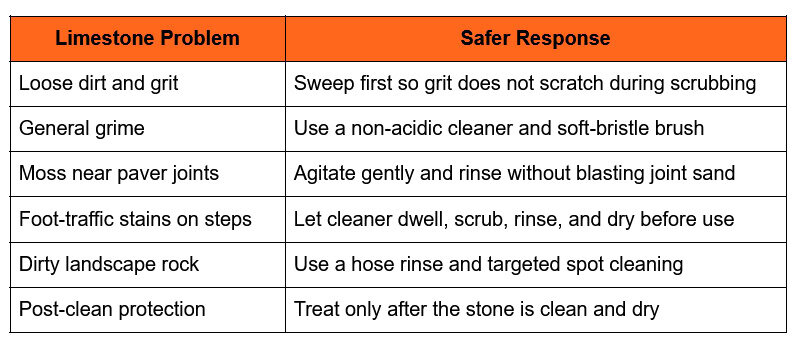
Pavers, steps, and landscape rocks all need a limestone-safe cleaner, but the details change with the way each surface is used.
How To Clean Limestone Pavers Without Disturbing Joints
Clean limestone pavers with a non-acidic cleaner, a soft-bristle brush, and a controlled rinse that does not blast out joint sand. When cleaning limestone pavers, keep the rinse controlled so the joints stay intact. Moss and dirt often collect along the joints first, so focus brushing there before scrubbing the full paver surface.
A garden hose is usually a safer starting point than a pressure washer. If pavers are stained by foot traffic, planters, leaves, or runoff, give the cleaner time to work before scrubbing. Do not scrape the surface with a metal tool. If joint sand has already washed out, clean the pavers first and address the joints after the surface is dry.
How To Clean Limestone Steps Without Creating A Slip Problem
Clean limestone steps by focusing on foot-traffic paths, darkened edges, and areas where algae or mildew can make the surface slick. Use the same limestone-safe cleaner and gentle-brush approach, then rinse from the top step down. Keep rinse water moving away from walking areas whenever possible.
Steps should dry fully before regular use. If the stone remains slick after cleaning, the issue may be biological growth, worn texture, residue, or a prior coating that needs professional evaluation.
How To Clean Limestone Landscape Rocks With A Lighter Touch
Limestone landscape rocks usually need less scrubbing than pavers or steps. Remove leaves and loose debris first, then rinse with a garden hose. Spot-clean visible grime instead of soaking the entire bed with cleaner.
Decorative limestone can shift when it is scrubbed too aggressively. A forceful spray can also move smaller pieces and expose soil underneath.
How To Clean And Seal Limestone Pavers
Once the limestone is clean, the next question is whether the surface should be protected.
Let Limestone Dry Before Protection
Sealing should take place after cleaning, rinsing, and full drying because a protective treatment performs best when the stone is free of soil and moisture. That sequence is part of how to clean outdoor limestone, and sealing should never be used as a shortcut for dirty limestone.
The same rule applies to limestone steps and other outdoor limestone surfaces that need post-cleaning protection. Drying time can vary with shade, temperature, humidity, stone density, and airflow. Do not judge dryness by the top surface alone if the pavers or steps sit in a damp area.
Use Water-Repellent Protection After Cleaning
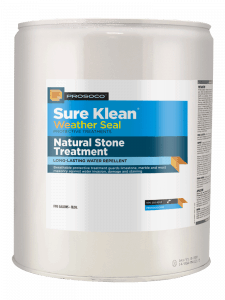
For protection after cleaning, PROSOCO Natural Stone Treatment is a water repellent developed for limestone, marble, and other traditional masonry surfaces. It is also modified for effectiveness on many calcareous surfaces. Use it as the protection step after the stone is clean and dry, and follow the product instructions for application conditions and coverage.
Limestone Cleaning Mistakes To Avoid
The safe method for how to clean outdoor limestone works best when damaging shortcuts stay out of the process. The wrong product or tool can leave a visible mark long after the dirt is gone.
- Skip vinegar on limestone. Vinegar is acidic, and acidic cleaners can dull or etch calcareous stone. Lemon juice and other acidic household cleaners create the same concern.
- Leave muriatic acid out of homeowner limestone cleaning. It is too aggressive for this kind of DIY surface care and can cause visible damage. It can also create safety risks for the person applying it.
- Skip bleach as the default limestone cleaner. Mild bleach may appear in some outdoor algae or moss guidance, but it should not be the routine starting point for this method. A limestone-safe cleaner and thorough rinse are the better first choice.
- Keep metal brushes away from limestone. Metal bristles can scratch the surface and may leave particles behind. Use a soft-bristle brush instead.
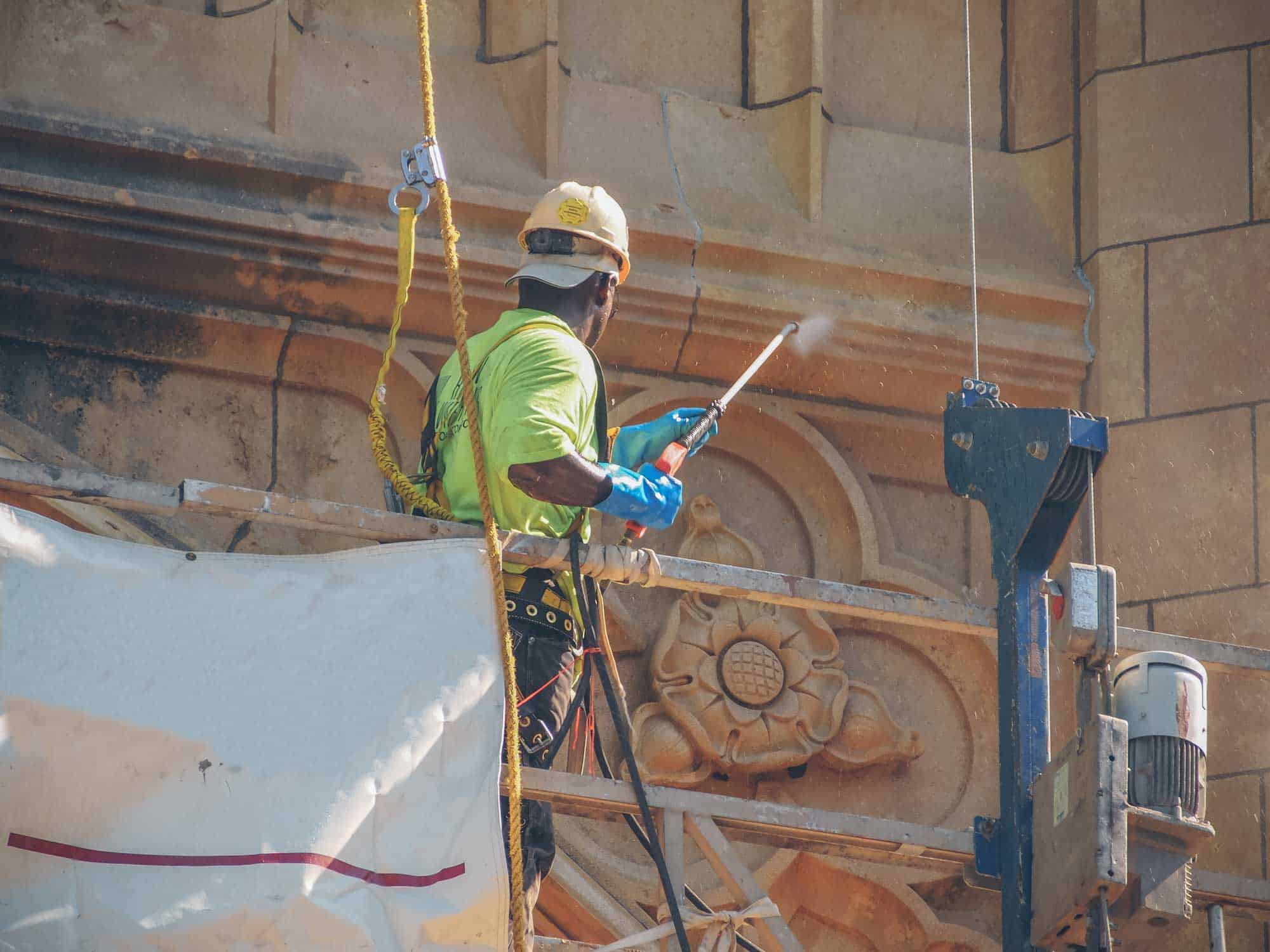
- Do not make pressure washing the default method. Aggressive pressure can pit limestone, roughen the surface, disturb paver joints, or worsen already-damaged areas.
- Do not seal dirty or damp limestone. Protection belongs after the full cleaning, rinsing, and drying cycle. Sealing over soil can lock in the very problem you were trying to remove.
Clean And Protect Limestone With PROSOCO
Outdoor limestone needs products matched to the stone, not generic cleaning shortcuts. Start with PROSOCO 2010 All Surface Cleaner to loosen soil, then apply Natural Stone Treatment for water-repellent protection after the surface is clean and dry. Contact us today for more information.
Frequently Asked Questions About Cleaning Limestone
Use these quick answers when you need a fast check before choosing a cleaner, tool, or sealing step.
Can You Use Vinegar On Limestone?
No. Vinegar is acidic and can etch limestone, leaving dull marks that normal cleaning will not remove.
How Do You Clean Limestone Without Damaging It?
The best way to clean limestone is to use a non-acidic cleaner, scrub with a soft-bristle brush, rinse thoroughly, and let the stone dry fully. Start gently before considering any stronger cleaning approach.
Can You Pressure-Wash Limestone?
Pressure-washing should not be your first choice. A forceful stream can pit limestone, disturb paver joints, or worsen already-damaged areas.
How Do You Clean Limestone Pavers?
Use a limestone-safe cleaner and soft brush, with extra care around mossy or dirty joints. Rinse with controlled water pressure so the joint sand stays in place.
How Do You Clean And Seal Limestone Pavers?
Clean the pavers first, rinse away residue, and let the limestone dry fully. Apply a suitable protective treatment only after the surface is clean and dry.
How Do You Clean Limestone Landscape Rocks?
Remove loose debris, rinse with a garden hose, and spot-clean dirty areas with a limestone-safe cleaner. Avoid heavy pressure that can move the rocks or expose soil underneath.