
Concrete driveways constantly accumulate dirt, vehicle residue, organic growth, and embedded stains. These contaminants settle into the surface because cured concrete contains microscopic pores that draw in water and dissolved contaminants. Once contaminants enter these pores, simple rinsing rarely removes them completely. Understanding how to clean concrete without pressure washer equipment begins with recognizing how stains interact with concrete and selecting methods that dissolve, lift, or extract those contaminants.
Why Concrete Driveways Accumulate Stains
Concrete behaves differently from smooth surfaces such as metal or tile. The material forms through a hydration process that leaves a network of capillary pores throughout the slab. Oil from vehicles, soil from tires, organic debris, and atmospheric pollutants can migrate into those pores over time. Petroleum stains and certain organic compounds penetrate deeper.
Because of this porous structure, driveway cleaning requires more than surface rinsing. Effective cleaning methods must remove both visible debris and contaminants embedded within the concrete.
Preparing the Driveway for Cleaning
Before applying any cleaning solution, remove loose debris from the driveway. Leaves, soil, and gravel prevent cleaning solutions from contacting the concrete surface directly.
A stiff push broom clears loose debris and exposes the areas that actually need treatment. This preparation step also prevents dirt from redistributing across the surface during scrubbing.
After sweeping, pre-wet the driveway with a garden hose. Dampening the surface allows the cleaning solution to spread evenly and remain active long enough to loosen contaminants. This preparation stage plays an important role in how to clean concrete without pressure washer tools because it improves the effectiveness of manual cleaning.
Manual Cleaning Process for Concrete Driveways
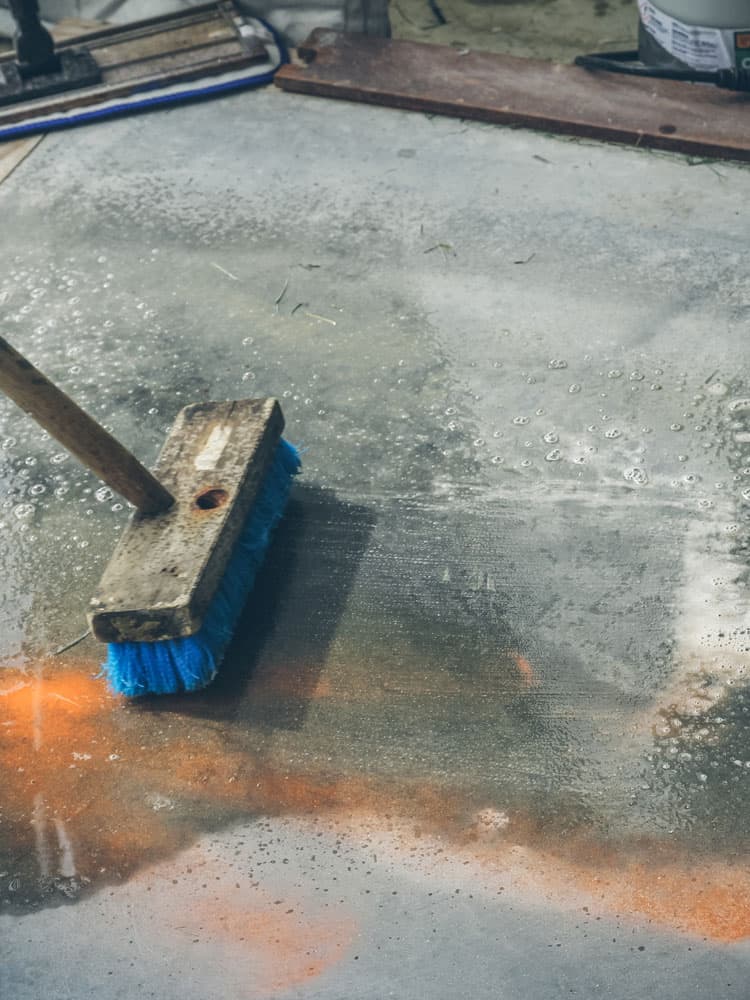
The basic cleaning process relies on chemical action and mechanical scrubbing rather than high-pressure water.
Apply a Concrete Cleaner
Apply a cleaner formulated for masonry surfaces. Products designed specifically for concrete break down dirt, atmospheric residue, and general driveway buildup while remaining compatible with the surface.
A light-duty cleaner formulated for masonry and concrete surfaces removes mud and atmospheric staining effectively. Products such as PROSOCO’s Light Duty Concrete Cleaner are designed to remove surface contaminants while remaining compatible with concrete substrates.
Scrub the Surface
Scrubbing provides the mechanical action required to loosen contaminants. Scrubbing remains the primary cleaning method when learning how to clean concrete without pressure washer equipment.
Use a stiff nylon brush or long-handled deck brush and work in manageable sections. Circular scrubbing motions help lift residue from the concrete pores so it can be suspended in the cleaning solution.
Rinse the Driveway
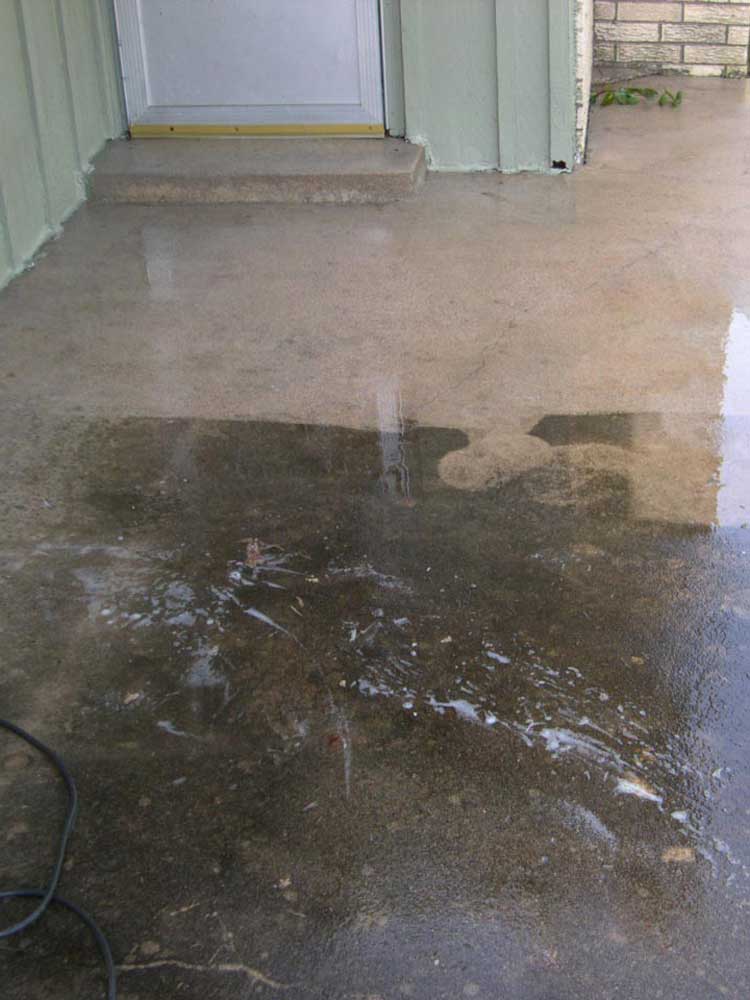
After scrubbing, rinse each section thoroughly using a garden hose. Rinsing removes the suspended contaminants before they can settle back into the surface.
Move steadily across the driveway so runoff carries debris away from areas that have already been cleaned. Repeating the process may be necessary where dirt accumulation has developed over time.
Removing Oil and Grease Stains from Concrete
Oil stains present a different challenge because petroleum products penetrate deeply into concrete pores. Engine oil migrates into the capillary structure of the concrete and forms dark stains that remain visible long after surface washing. Standard detergents typically remove only surface residue.
Oil Extraction Cleaning Method
Oil removers for concrete often work through extraction rather than simple washing. These cleaners work like poultices, extracting oil from the concrete as the product dries.
- The cleaner absorbs petroleum residue from the concrete pores and traps it in the dried material. After the product dries, the residue can be brushed away.
- Oil stains penetrate the capillary pores of concrete and often require targeted oil stain removal methods that draw petroleum residue out of the surface rather than simply washing the stain away.
This extraction method offers a reliable approach for how to clean concrete without pressure washer equipment when oil contamination is present.
Removing Mold, Mildew, and Organic Growth
Driveways located in shaded or damp environments often develop algae, mildew, or moss. These organisms attach to the concrete surface and trap moisture and dirt, creating green or dark stains across the slab. Organic contamination requires cleaners capable of breaking down biological material.
- Apply the cleaner to the affected area and allow the solution to remain on the surface for the recommended dwell time.
- This dwell period allows the active ingredients to react with organic growth before scrubbing begins.
- After scrubbing, rinse thoroughly to remove the detached residue.
Following this process provides another effective method for how to clean concrete without pressure washer tools when biological staining develops.
Selecting the Right Concrete Cleaner
Different driveway stains respond to different cleaning formulations, which is why selecting from the best concrete cleaners designed for masonry surfaces improves cleaning results. Tire marks, rust, organic growth, and petroleum contamination each require specific cleaning chemistry.
Professional cleaners formulated for masonry surfaces simplify driveway maintenance because they target common driveway contaminants while remaining suitable for concrete surfaces.
Using the correct cleaner makes stain-specific cleaning more effective across the driveway.
Routine maintenance helps prevent stains from penetrating deeply into the concrete surface.
- Regular sweeping removes soil and debris that can accumulate in the pores.
- Prompt treatment of oil leaks prevents petroleum stains from spreading through the slab.
- Periodic washing removes atmospheric dirt before it builds up across the driveway.
- Understanding how to clean concrete without pressure washer equipment allows property owners to maintain their driveways using accessible tools and appropriate cleaners.
Consistent maintenance restores the natural appearance of concrete and helps protect the surface from long-term discoloration.
Use PROSOCO Concrete Cleaners for Effective Driveway Maintenance
Concrete cleaning products formulated for masonry surfaces remove embedded contaminants while remaining compatible with concrete surfaces. PROSOCO manufactures cleaners designed to dissolve dirt, extract oil stains, and remove biological growth from concrete driveways. Contact us today for more information.
Frequently Asked Questions About Cleaning Concrete Driveways
How do you clean concrete without a pressure washer?
Sweep loose debris, apply a concrete cleaner, scrub the surface with a stiff brush, and rinse with a garden hose. This method removes dirt and stains through chemical cleaning and mechanical scrubbing rather than high-pressure water.
What is the best way to clean a concrete driveway without pressure washing?
Use a cleaner designed for masonry surfaces and scrub the driveway with a stiff nylon brush. The cleaner dissolves dirt and residue while brushing loosens contaminants from the concrete pores.
Can oil stains be removed from concrete without pressure washing?
Yes. Oil removers formulated for concrete can draw petroleum residue out of the concrete pores as the product dries, allowing the residue to be brushed or rinsed away.
What tools can be used to clean a concrete driveway?
Common tools include a stiff push broom for debris removal, a nylon scrub brush or deck brush for scrubbing, and a garden hose for rinsing. These tools provide the mechanical action needed to lift contaminants from the concrete surface.
How often should a concrete driveway be cleaned?
Most driveways benefit from cleaning once or twice per year. Regular sweeping and prompt treatment of oil leaks or organic growth help prevent stains from penetrating the concrete surface.