
The wrong cleaner can leave a concrete floor looking worse. Oil may remain below the surface, an incompatible product can dull a protective finish, and uncontrolled water can create another problem indoors. Learning how to clean concrete floors starts with identifying the floor treatment and contaminant, then deciding whether the job requires routine cleaning, deep degreasing, or restorative stain removal.
Start With the Floor and the Contaminant
The best way to clean concrete floors depends on what is on the floor, whether the concrete has an existing surface treatment, and how deeply the contamination has entered the slab. Loose dust on sealed concrete calls for a different response than an old motor-oil stain in an unsealed garage, and a warehouse floor covered with grease and tire marks needs a different process than one localized spot. Use a cleaner that is compatible with the floor’s existing treatment and formulated for the dirt, stain, or residue being removed. Effective concrete floor and surface cleaning separates routine soil from broad grease films, rubber residue, and deeply embedded stains.
Concrete also presents challenges that do not apply to many other flooring materials. Bare concrete is porous enough to absorb some liquid contaminants, and treated concrete may have a sealer, coating, stain, guard, or densifier that affects which products and tools can be used.
Identify the Concrete Surface Before Cleaning
Start by finding out what treatment, if any, is already on the concrete.
Bare or Unsealed Concrete
Unsealed concrete can absorb liquids below the visible surface. Fresh spills should be addressed promptly before oil, grease, or other contaminants have more time to penetrate.
The absence of obvious gloss does not prove that a floor is untreated. Penetrating sealers, curing compounds, densifiers, and worn protective treatments may be difficult to recognize by appearance alone.
Sealed, Coated, or Painted Concrete
A cleaner applied to sealed, coated, or painted concrete contacts the protective layer first. An incompatible cleaner, wire brush, or aggressive pad may dull, scratch, damage, or remove that layer.
Repeated use of an incompatible cleaner or excessive abrasion can shorten the useful life of a sealer or coating, leaving the floor harder to maintain. Check product records, installer information, or manufacturer instructions when the existing system is uncertain.
Stained, Polished, or Densified Concrete
Stained concrete often has a sealer or guard over the color treatment. Polished or densified floors may also include hardeners, guards, or other treatments that affect maintenance.
These floor systems can be difficult to classify by appearance alone.
How to Clean Concrete Floors Safely
Following the steps in order keeps loose grit, the wrong cleaner, or leftover residue from making the floor harder to restore.
- Clear and inspect the floor. Move stored items, equipment, and furniture that block access. Note cracks, peeling coatings, worn protection, and stained areas before cleaning begins.
- Remove loose debris. Sweep, dust mop, or vacuum the floor before adding liquid. Grit left behind may scratch a finish when the floor is scrubbed.
- Determine the surface and contaminant. Separate ordinary dirt from oil, grease, rubber, rust, adhesive, old wax, and other residue.
- Choose a compatible cleaner. Match the product to the contamination and existing floor treatment. Review the current dilution, application, dwell-time, and removal instructions.
- Test a small area. Apply the cleaner in an inconspicuous location and check for discoloration, dulling, damage, residue, or another unwanted change.
- Apply and agitate as directed. Use the specified dilution and allow the required dwell time. Scrub with a nylon brush, suitable pad, mop, or compatible floor machine as directed.
- Remove residue and inspect the dry floor. Recover the dirty solution, rinse when required, and allow the floor to dry before evaluating the result.
Never mix cleaners unless the manufacturer expressly authorizes the combination. Follow current requirements for ventilation, protective equipment, disposal, and water recovery. Testing provides an additional compatibility check under the actual conditions of the floor and work area, but it does not replace the product instructions.
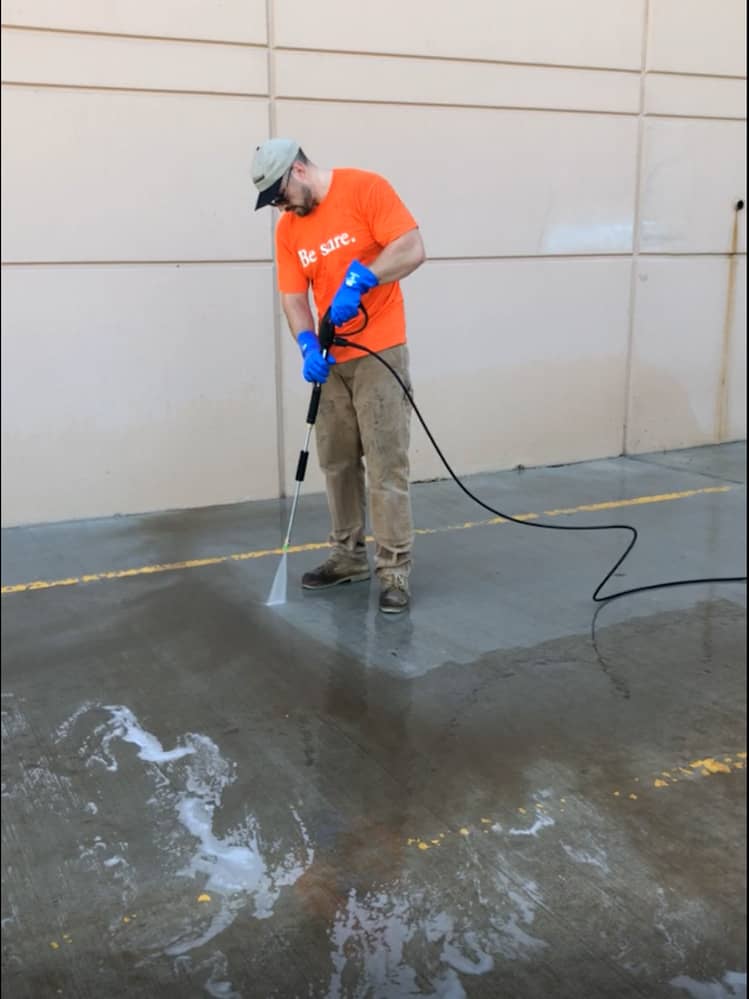
Separate Routine Cleaning From Restorative Cleaning
Routine Cleaning: Scrubbing is usually enough when ordinary dirt or fresh residue remains on the surface and responds to a compatible maintenance cleaner. Dry soil removal followed by compatible damp cleaning may be sufficient for a basement, garage, retail floor, or warehouse that receives regular care. DailyKlean is one PROSOCO option formulated for routine maintenance and common soiling on concrete floors.
Deep Restorative Cleaning: Bonded residue or penetrated stains require a specialty cleaner and a more intensive process. Knowing how to clean concrete floors once routine maintenance stops working requires matching the cleaner to the type and depth of the contamination. Deep cleaning starts with a product formulated for the stain or residue. Give it the required dwell time, scrub as directed, and remove the loosened soil and cleaning solution.
A professional cleaner formulated for a specific contaminant gives the user a defined application method instead of relying on repeated cleaning with a general-purpose product. The problem may involve surface grease, penetrated oil, rubber residue, or restorative buildup.
|
Condition or Contamination |
Cleaning Level |
Method Category |
PROSOCO Example |
|
Loose dirt and common grime |
Routine |
Compatible maintenance cleaning |
DailyKlean |
|
Widespread grease or tire marks |
Deep cleaning |
Area-wide degreasing |
Cleaner/Degreaser |
|
Penetrated oil or grease spot |
Specialty treatment |
Poultice extraction |
Oil & Grease Stain Remover |
|
Known lithium-silicate densified floor |
Routine |
System-compatible cleaning |
LSKlean |
|
Rust, skid marks, old wax, or heavy soil |
Restorative |
Specialized restoration cleaning |
Concrete Floor Restorer |
Confirm product and surface compatibility before full-floor application.
Match Common Stains to the Correct Method
The next step depends on what caused the mark and whether it remains on the surface or has entered the concrete.
Everyday Dirt and General Grime
Begin by sweeping, vacuuming, or dust mopping. Follow with a compatible maintenance cleaner and a microfiber mop, nylon brush, or suitable floor machine.
Use enough solution to loosen the soil without flooding an indoor area. Repeated mopping may not fully remove penetrated oil, rust, or old wax, and it cannot repair a finish that has already been scratched, dulled, or chemically damaged. If discoloration remains after the floor dries, determine whether the mark is a stain, residue, worn coating, or physical surface damage.
Grease Films and Tire Marks
A widespread film across a garage, warehouse aisle, or service area needs area-wide degreasing. The cleaner must loosen oily residue so it can be lifted and recovered instead of spread over the floor.
Cleaner/Degreaser can be used for widespread oil and grease films, rubber tire marks, scuffs, adhesive residue, fuel residue, and accumulated dirt and airborne residue on concrete floors. A greasy warehouse aisle with forklift tire marks may also require mechanical agitation and controlled recovery of the dirty cleaning solution.
Embedded Oil and Grease Stains
An old motor-oil spot on unsealed concrete presents a deeper problem. A liquid degreaser may remove surface residue and reveal contamination that has entered the pores.
Oil & Grease Stain Remover forms a poultice over the spot. As it dries, the treatment draws oily contamination from porous concrete into the absorbent material. This localized method is suited to deeply set oil-based stains that remain after surface cleaning and should not be confused with area-wide degreasing for a broad film.
 Rust and Metallic Stains
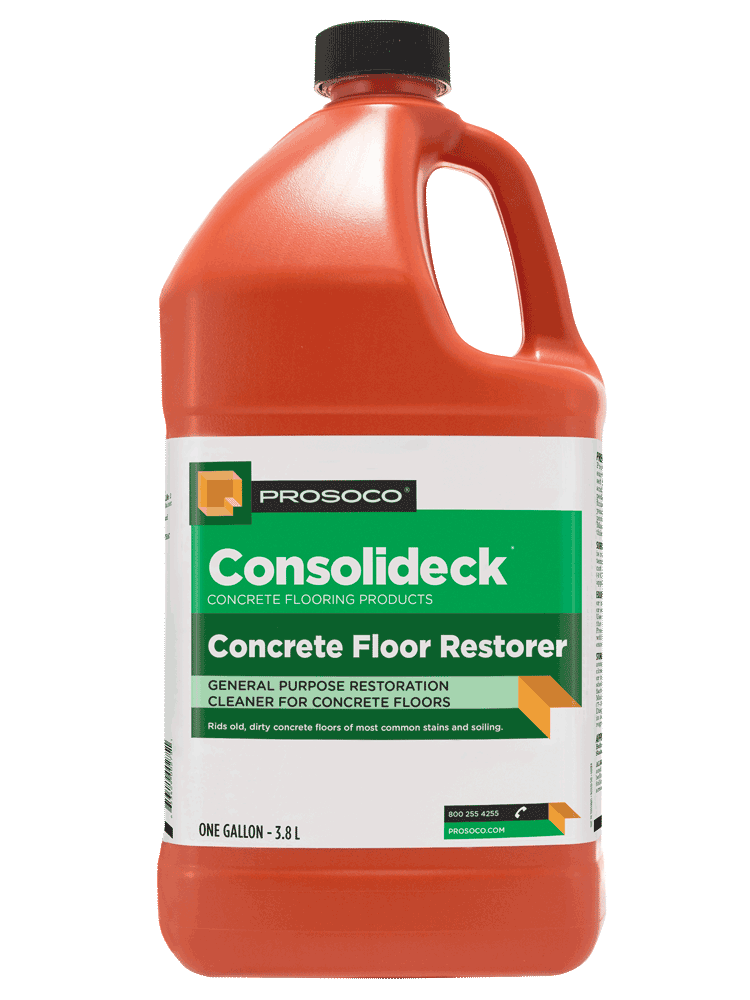
Rust should not automatically trigger vinegar, an improvised acid mixture, or the strongest cleaner available. Acidic products can affect coatings, decorative finishes, adjacent materials, and the appearance of exposed concrete when used on an incompatible surface.
Concrete Floor Restorer is a specialized, special-order product for older, heavily soiled concrete with rust, metallic stains, skid marks, old wax, dirt, and accumulated airborne residue. An older slab with several of these conditions may require restorative cleaning before repairs, densification, or another treatment can begin.
Clean Sealed and Unsealed Concrete Differently
Once the floor type is established, the cleaning method can be adjusted to the way the surface handles water, cleaning products, and scrubbing. Unsealed concrete can absorb water, oil, and other liquids below the surface. Water and surface scrubbing may not fully remove oil that has penetrated the concrete.
To determine how to clean concrete floors with sealers or coatings, start with the maintenance requirements for the existing finish. Confirm that the cleaner and scrubbing method will not scratch, dull, damage, or remove the protective layer. The same caution applies when deciding how to clean stained concrete floors because the visible color may be covered by a sealer or guard that determines which products and tools can be used safely.

Maintain Polished and Densified Floors as a System
Polished and densified floors should be maintained according to the complete floor system rather than appearance alone.
Match Maintenance to the Floor System
Regular grit removal is the starting point for deciding how to clean polished concrete floors. Fine abrasive soil can reduce gloss as foot or equipment traffic grinds it against the surface.
DailyKlean provides a general maintenance option for concrete floors, including floors treated with several Consolideck densifiers. LSKlean has a narrower use and is intended for concrete known to have been hardened or densified with a lithium-silicate treatment. Floor records may identify the densifier, protective guard, maintenance cleaner, pads, and equipment suited to the system.
Adjust Equipment and Frequency to the Space
Large commercial floors may be cleaned with automatic scrubbers when the machine, cleaner, dilution, pad, and recovery process match the floor. Cleaning frequency should reflect the actual traffic, soil load, and spill exposure.
The work location also determines how cleaning solution and dirty water can be contained and removed.
How to Clean Concrete Floors Indoors Without Uncontrolled Water
Indoor cleaning depends on controlling both the amount of solution applied and how completely it can be recovered.
Control Cleaning Solution and Drying
A basement without a convenient drain should be vacuumed or dust mopped first, then cleaned in manageable sections. Indoors, use only as much cleaning solution as you can keep under control and remove completely.
A wet vacuum, mop, automatic scrubber, or suitable extraction equipment may be needed to recover the dirty liquid. Keep the solution from drying back onto the surface and maintain airflow until the space and floor are dry.
Use Pressure Washing With Caution
Pressure washing an indoor slab is rarely a simple substitute for scrubbing. Excessive pressure can damage coatings or sealers, alter the appearance of exposed concrete, and force water into cracks or adjacent construction.
Water may also reach wall assemblies, stored materials, electrical equipment, or nearby rooms that are difficult to dry. Indoor pressure washing should be considered only when the surface, containment, drainage, recovery, and ventilation can all support the process. These controls are central to the best way to clean a concrete basement floor.
Evaluate the Floor Before Applying New Protection
Cleaning may reveal worn traffic lanes, uneven sheen, or high-use areas where the existing protection no longer performs consistently. A calendar alone does not determine when resealing is appropriate. The decision depends on the existing floor system, the level of wear, the intended use, and the requirements of the proposed treatment.
Do not apply a new treatment over remaining contamination or cleaner residue. Follow the product’s specific drying, moisture, and surface-preparation requirements before application. A suitable protective treatment may reduce the penetration of future spills and make routine soil easier to remove, but that benefit depends on proper preparation, application, and maintenance.
Avoid Common Concrete Floor Cleaning Mistakes
Before starting the work, review the mistakes that most often lead to poor cleaning results or finish damage:
- Choosing a cleaner before determining the floor treatment
- Treating every discoloration as ordinary dirt
- Using a wire brush or aggressive pad on a coating or decorative finish
- Mixing cleaning products
- Guessing at dilution or dwell time
- Allowing dirty solution or residue to dry on the floor
- Using excessive pressure on a coating, sealer, or vulnerable surface
- Flooding an indoor area without a recovery and drying plan
- Applying new protection before meeting the product’s cleaning, drying, and moisture requirements
- Assuming a stronger cleaner will always produce a better result
Evaluate the test area after the cleaner has been removed and the surface has dried.
Build a Practical Concrete Floor Maintenance Routine
Sweep, vacuum, or dust mop abrasive grit regularly. Clean spills promptly, place entry mats where they can reduce tracked-in soil, and use a maintenance cleaner suited to the known floor treatment.
A written schedule that explains how to clean concrete floors can reduce the need for repeated restorative cleaning. Inspect high-traffic areas for worn protection, and address oil, grease, or tire marks before they develop into broad films or deeply set stains. Facility managers should retain floor-system and product records so compatible cleaners, tools, and maintenance methods can be selected when staff members or service providers change.
Match the Right Cleaner to Your Floor With PROSOCO
An old oil stain, a broad grease film, and a treated concrete floor may each require a different cleaning product. PROSOCO technical support can help match the surface condition and maintenance goal with an appropriate cleaning product and application method. Contact us today for more information.