
Graffiti does not sit on every wall the same way. Anyone searching for the world's best graffiti remover is usually dealing with more than one cleaning variable. Spray paint, marker ink, lacquer, stickers, and clear-coated residue bond differently to concrete, brick, block, and stone, which is why PROSOCO’s own guidance starts with stain type and substrate rather than a one-size-fits-all product claim.
How Graffiti Removers Work on Concrete and Masonry
On porous masonry, removal gets harder fast. Graffiti removers work either by dissolving the stain itself or by weakening the bond between the graffiti and the substrate, but brick, stone, and rough concrete can let paint and marker residue sink below the face of the material. That is why graffiti removal depends on the stain and substrate and why the same chemistry can perform well on one wall and stall on the next.
That material behavior also explains why crews have to be careful with pressure and abrasive methods. PROSOCO warns that blasting too aggressively can remove the masonry face instead of just the graffiti, and preservation guidance warns that rough brick and stone can suffer more damage during removal than from the graffiti itself. When removing graffiti from a building or sidewalk, the safer approach is to match the chemistry to the surface before escalating the method.
How the 5 PROSOCO Removers Split the Work
Here are five graffiti-removal options currently available from PROSOCO: Graffiti Remover, Heavy Duty Paint Stripper, Safety Peel 1, SafStrip, and SafStrip 8. Each one fits a different wall condition, from ordinary spray-paint and marker cleanup to stronger gel stripping, neutral-pH stripping, extended-contact removal, and containment-focused paste removal.
Graffiti Remover
Graffiti Remover is made for spray paint and marker cleanup on compatible surfaces such as smooth masonry, split-faced block, wood, and metal. It is low odor, water-rinsable, VOC-compliant, made with readily biodegradable ingredients, and it will not remove Blok-Guard & Graffiti Control protective treatments.
That makes it a practical choice when the wall needs straightforward cleanup and the residue has not built into a heavier stripping job. A product competing for the world's best graffiti remover has to handle that everyday range before tougher coatings start narrowing the options.
SafStrip
SafStrip is used when the coating on the wall is heavier, older, or harder to release with a basic remover. It is formulated to cut through stronger paints, clear coatings, and graffiti residues on masonry, concrete, wood, and metal, and it can be rinsed away with water after the dwell period. It also avoids a separate neutralization step after cleaning.
Its gel consistency is one of the main advantages on vertical work. On walls, columns, and detailed masonry, that extra cling can keep the remover in contact with the coating longer instead of letting it slide off before the chemistry has time to work.
SafStrip 8
When the wall still needs strong removal but the cleanup process has to stay simpler, SafStrip 8 becomes the better fit. It is designed for hard surfaces including masonry and concrete, and it removes tougher paints, clear finishes, and graffiti residues while keeping a neutral-pH profile. It also rinses with water or steam and does not require neutralization after use.
For contractors comparing formulas, the world's best graffiti remover is usually the one that matches the wall condition and the cleanup method at the same time. SafStrip 8 is strongest where the surface still needs serious stripping power, but the crew wants a simpler post-cleaning process.
Heavy Duty Paint Stripper
Heavy Duty Paint Stripper is made for masonry carrying older graffiti, multiple paint layers, or buildup that needs more contact time to break down. PROSOCO lists it as staying active for up to 24 hours, which puts it in a different category from quicker removal work.
That longer working window matters on neglected walls, repeat-hit surfaces, and areas where coating buildup has been sitting in place long enough to resist shorter-contact removers. When the chemistry needs time to keep cutting through the residue instead of stopping at the surface, this is where the lineup shifts into heavier stripping work.
Safety Peel 1
Safety Peel 1 solves a different problem. Instead of focusing only on stripping strength, it also addresses containment. It is a paste remover for paint, graffiti, and clear coatings, contains no methylene chloride or methanol, and stays mild enough in odor for interior use. As it dries, it captures paint solids in the material so they can be removed with the peeled film rather than washed loose during cleanup.
That makes it especially useful in occupied spaces or other controlled work areas where runoff, debris, and disposal logistics matter as much as the graffiti itself. When readers ask what is the best graffiti remover, this is where cleanup control starts to matter as much as raw cutting power.
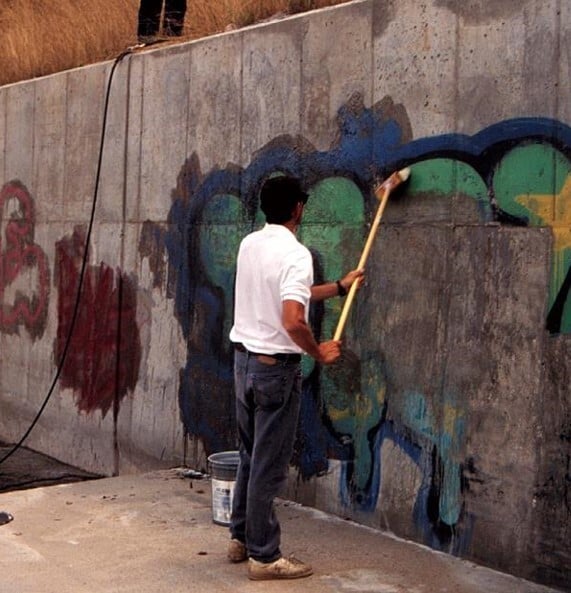
How These Graffiti Remover Types Compare in the Field
The clearest way to compare these products is by how they behave during removal, not by trying to force one winner across every wall. In this lineup, solvent-based and solvent-assisted removers handle heavier coating breakdown, gel removers hold contact time on vertical masonry, and lower-impact options lean toward easier handling, lower odor, biodegradable ingredients, or reduced hazardous-solvent content depending on the formula.
Ease of Use
Ease of use starts with how well the remover stays where it is applied and how much cleanup it creates afterward. Gel removers stay in place better on vertical walls and detailed surfaces, which helps preserve dwell time when runoff would otherwise cut it short. Formulas that do not require neutralization also make rinsing and cleanup simpler. Peel-away paste systems reduce loose-waste handling by containing removed coating in the material itself, and lower-odor, water-rinsable options are easier to manage on compatible surfaces.
Surface Compatibility
Surface compatibility comes down to how much removal strength the wall needs and how much sensitivity the substrate can tolerate. Lighter-duty removers fit compatible masonry carrying common spray paint or marker residue, while stronger gels and extended-contact strippers fit coatings that have bonded more deeply or built up over time. Containment-oriented paste systems become more useful where interior conditions, odor control, runoff, or debris handling shape the process as much as the wall itself.
Performance
Performance shifts with the age of the graffiti, the chemistry of the coating, the wall orientation, and the dwell time the job allows. Solvent-based and stronger stripping formulas matter more once the graffiti load gets thicker, older, or more chemically stubborn, while gel removers matter when vertical cling and longer contact improve results. Lower-impact options matter when the job needs workable removal strength without defaulting immediately to the harshest chemistry or the messiest cleanup.
What Changes the Best Choice on a Real Wall
Field conditions still control the final choice. PROSOCO notes that every graffiti medium is different, some chemistries need extended dwell time before they start moving, colder temperatures can slow product performance, and hot water plus warm conditions can make removal easier.
Preservation guidance also requires test panels in inconspicuous areas and defines the best method as the one that removes graffiti with no or minimal damage to the masonry substrate. If the wall is porous, the coating is old, or the finish is delicate, the world's best graffiti remover may be a gel or extended-contact product chosen after testing rather than the fastest liquid on the shelf.
Why Graffiti Protection Still Matters After Removal
Once the graffiti comes off without scarring the surface, the maintenance logic changes. Unwanted graffiti tends to attract more graffiti, so post-cleanup planning should include protective treatments and breathable, penetrating anti-graffiti protection that make the next removal cycle easier to manage. Applying protection after cleanup does not replace careful remover selection, but it does make future graffiti removal faster and less labor-intensive.
Choose PROSOCO for Masonry Graffiti Removal
Start with the wall, the coating load, and the cleanup conditions instead of chasing a universal label. PROSOCO’s lineup gives crews a workable range from broad first-pass removal to neutral-pH gel stripping, extended-contact removal, and containment-focused paste cleaning. Contact us today to identify the right graffiti remover for your concrete or masonry surface and build a removal plan that reduces the risk of avoidable damage during cleanup.
FAQ
Which type of graffiti remover works best on porous concrete?
Porous concrete usually responds best to a remover chosen by graffiti type, dwell-time needs, and substrate sensitivity rather than by a one-product approach, because residue can sink below the face of the surface.
Are gel graffiti removers better for vertical masonry walls?
Gel removers are often better on vertical masonry because they stay in contact with the surface longer, which helps maintain dwell time where runoff would shorten the cleaning window.
Can graffiti remover damage brick or mortar?
Yes, the wrong chemistry or an overly aggressive removal method can damage brick or mortar, which is why PROSOCO and preservation guidance both stress matching the remover to the surface and testing before full application.
When do you need a heavier-duty graffiti remover?
A heavier-duty remover becomes more useful when graffiti has been on the wall long enough, or built up enough, that shorter-contact removal work is no longer enough to break it down.
Do you need to test graffiti remover before full application?
Yes, testing in an inconspicuous area helps identify the gentlest effective method and reduces the risk of avoidable surface damage during removal.