
Old brick walls were never designed to be sealed like modern masonry systems. They were built to absorb, release, and redistribute moisture as environmental conditions changed over time. Problems emerge as age, weathering, and environmental load increase the amount of water those walls absorb without providing a controlled path for that moisture to exit. At that point, waterproofing brick becomes less about stopping water entirely and more about managing how liquid moisture enters and leaves the masonry system.
Why Old Brick Walls Need Protection
Older masonry changes physically as it weathers, which alters how it interacts with moisture over time.
Moisture Absorption and Porosity Changes
As brick ages, its surface becomes more porous. Repeated wetting cycles open capillaries within the fired clay, while mortar joints gradually erode and develop microcracks. These changes increase absorption rates and allow water to move deeper into the wall assembly, where it becomes harder to release.
Liquid moisture travels through brick by capillary action, carrying dissolved salts along the way. When that moisture migrates back to the surface and evaporates, salts crystallize, generating internal pressure that weakens both brick and mortar. This process explains why deterioration often begins internally before surface damage becomes visible.
Freeze-Thaw Stress in Aging Masonry
Freeze-thaw stress compounds that damage. When absorbed water freezes inside brick pores, it expands, forcing microcracks to widen with each cycle. That pressure has consequences. As cracks grow, they admit more moisture during subsequent wetting events, accelerating deterioration through surface loss, mortar failure, and spalling.
When Brick Should Be Sealed—and When It Shouldn’t
Sealing decisions depend on exposure, material condition, and drying behavior rather than age alone. Walls that remain sheltered from direct rain or that dry consistently without salt movement may not benefit from immediate treatment.
Sealing becomes appropriate when one or more of the following conditions are present:
- Repeated wetting overwhelms the wall’s ability to dry between weather events
- Efflorescence persists despite improvements to drainage and water management
- Interior moisture symptoms can be traced to exterior water absorption through the brick
Evaluating these conditions clarifies whether waterproofing brick is appropriate at a given stage of the wall’s service life.
Interior moisture problems often lead to incorrect solutions. Applying sealers from the interior side does not address exterior water entry and can worsen conditions by trapping moisture within the wall. Effective protection begins on the exterior, where liquid water enters the system.
Inspecting Brick Walls Before Waterproofing
Before any protective treatment is considered, the wall must be evaluated as a moisture system rather than a surface finish, because old brick walls rarely deteriorate uniformly. Moisture intrusion tends to concentrate at parapets, window heads, copings, grade transitions, and areas exposed to persistent runoff. Mortar joints may appear intact from a distance while showing advanced erosion at close inspection, while hairline cracking, softened mortar, and spalled faces indicate prolonged moisture movement through the wall.
Inspection should also focus on exposure contributors such as poor drainage, leaking gutters, failed flashing, and soil contact. Sealing brick without addressing these conditions limits the effectiveness of any treatment. Waterproofing brick succeeds only when water exposure is reduced at the building level and absorption is controlled at the material level.
Surface Preparation for Brick Waterproofing
Surface preparation governs how well any masonry treatment performs once applied, which is why brick must be clean enough to allow penetrating products to enter the pore structure evenly. Dirt, biological growth, soot, and atmospheric pollutants block absorption and create uneven protection. Efflorescence must be removed before sealing rather than sealed in place, since salts left in the wall continue migrating and crystallizing beneath the surface.
Cleaning methods must match the brick’s condition. Aggressive techniques are likely to damage soft or historic masonry, while insufficient cleaning prevents penetration. After cleaning, drying time carries equal importance. Brick that remains saturated cannot accept penetrating water repellents effectively, which limits absorption depth and shortens service life. Performance depends on conditions, not simply product selection.
Choosing the Right Products for Waterproofing Brick Walls
Product selection for waterproofing brick depends on how materials interact with masonry pores and how moisture is expected to move through the wall after treatment.
Surface Sealers vs. Penetrating Water Repellents
Surface sealers form barriers on top of brick, restricting both liquid water and vapor movement. Penetrating water repellents enter the pore structure and chemically bond within the masonry instead. For older brick, breathable penetrating repellents reduce capillary water absorption while allowing vapor diffusion to continue, preserving the drying behavior aging masonry relies on for durability.
Why Siloxane-Based Repellents Are Commonly Used
Siloxane-based water repellents are commonly specified because of their small molecular size and deep penetration capability. PROSOCO’s brick water repellents chemically line pore walls rather than filling them, which reduces water uptake without creating surface films that interfere with vapor movement.
Selecting Performance Levels for Exposure Conditions
In exposed conditions, higher-performance options like Siloxane PD provide durable water repellency while maintaining vapor permeability. When properly selected and applied, these treatments protect brick without changing appearance or forming coatings that peel or blister over time.
Matching Products to Existing Masonry Conditions
Matching repellents to brick condition, exposure level, and performance expectations depends on established brick sealing strategies for existing masonry. Brick density, mortar condition, weather exposure, and maintenance goals all influence which chemistry delivers reliable long-term protection without disrupting moisture balance.
Best Practices for Applying Brick Sealers
Application technique often determines whether a brick sealer performs as intended, particularly in how evenly it penetrates masonry and cures under field conditions.
Achieving Uniform Saturation
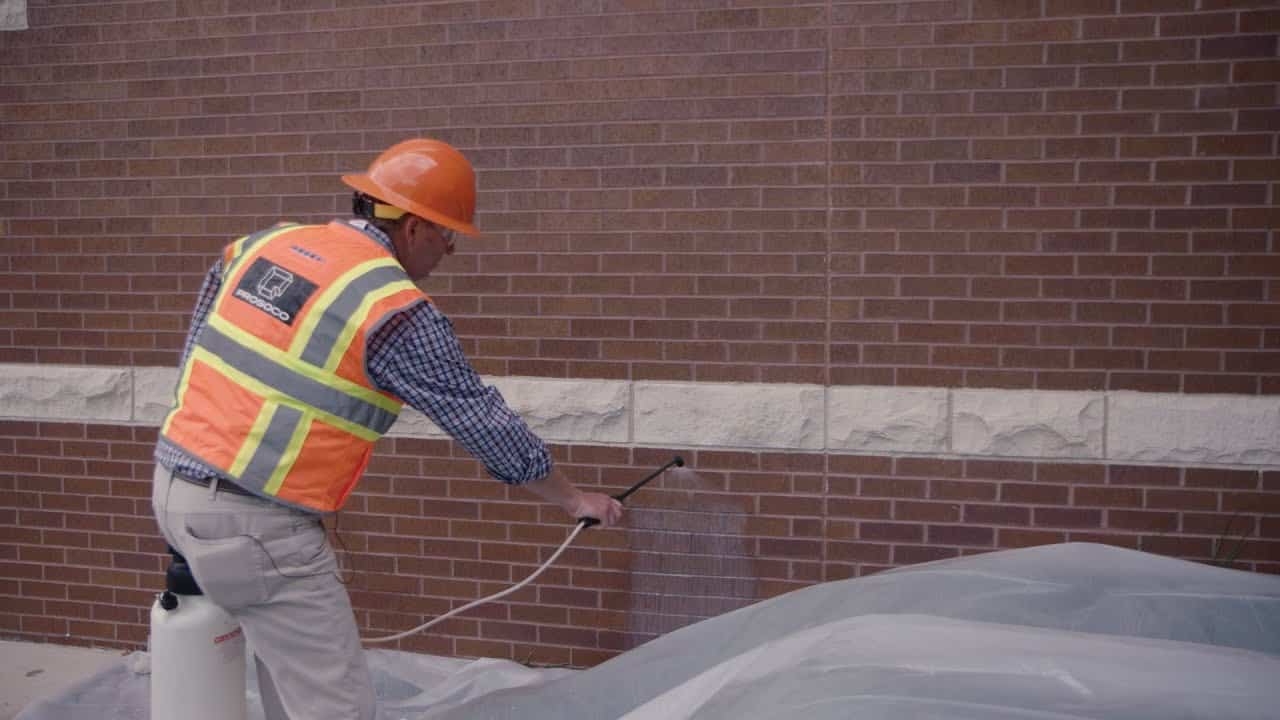
Uniform saturation produces consistent penetration across varied brick densities and mortar profiles. Applying too lightly reduces protection, while excessive application wastes material without improving performance. Low-pressure spray equipment allows controlled distribution, ensuring the product is absorbed into the masonry rather than left on the surface.
Managing Environmental Conditions During Application
Environmental conditions during application directly affect sealer performance. Temperature extremes interfere with curing, wind affects spray control, and rain shortly after application can wash material away before penetration occurs. Proper planning ensures the treatment performs as intended once cured.
Maintaining Waterproofed Brick Over Time
Water repellents gradually lose effectiveness as environmental exposure and surface wear accumulate. Long-term performance depends on maintenance awareness and monitoring rather than assumptions of permanence.
Periodic inspections and simple water-shedding tests help identify when protection is diminishing. Reapplication timing varies based on exposure, wall orientation, and climate severity. Waterproofing brick should be approached as an ongoing maintenance practice rather than a one-time solution.
Protect Brick Walls with PROSOCO Masonry Repellents
PROSOCO develops breathable masonry protection products designed to reduce water absorption while preserving vapor permeability in brick walls. Each formulation is engineered to penetrate masonry substrates without altering appearance or disrupting long-term drying behavior. Contact us today for more information.