Why used Targeted Interior Air Seal over closed-cell foam?

Targeted Interior Air Seal (TIAS) is getting noticed by residential builders thanks to Matt Risinger, who recently shared two different videos demonstrating its use. 

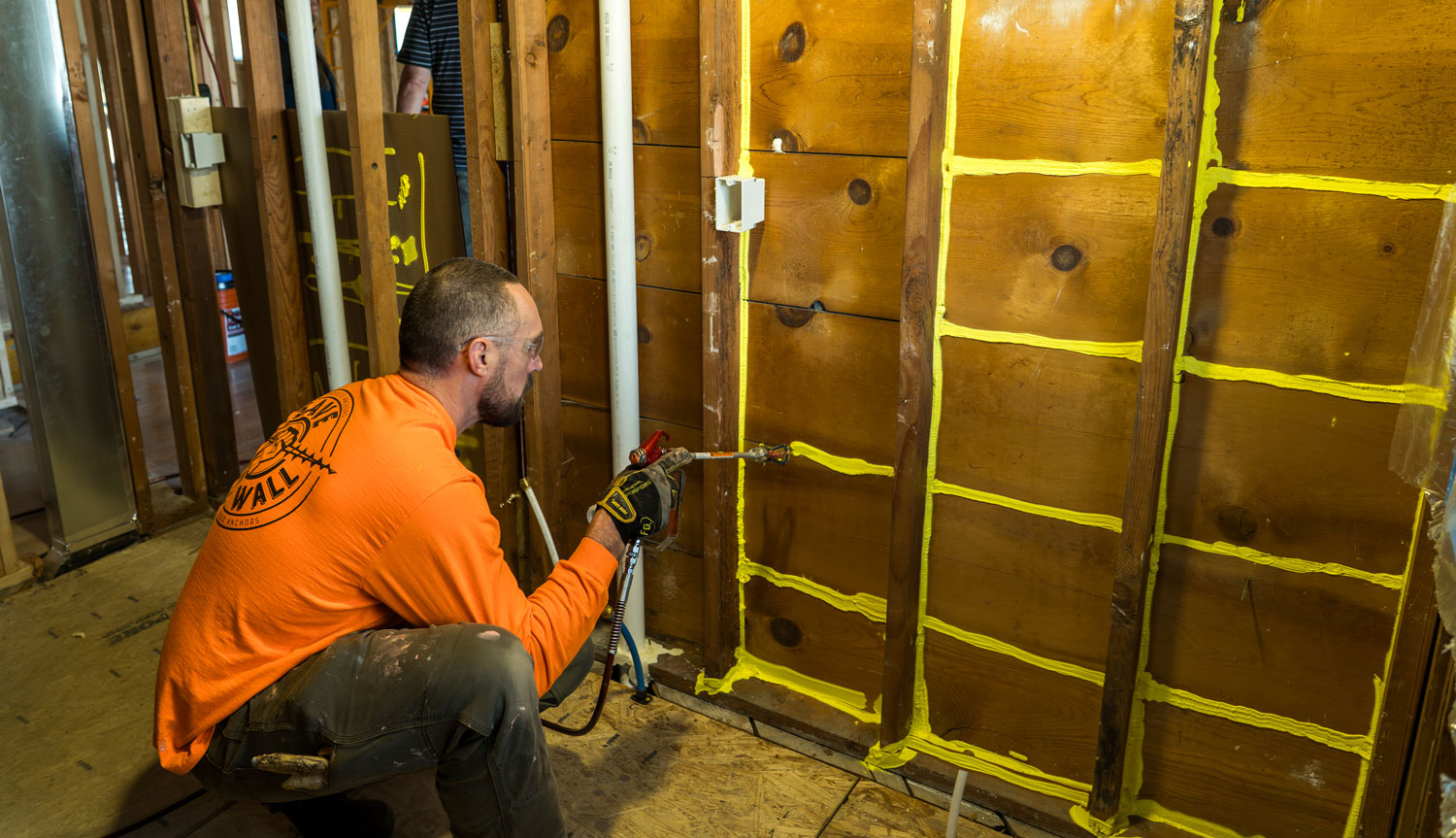
In one video on Instagram, he applied TIAS with a bulk loading gun from the interior of a home where they wanted to save the exterior brick. He says that he prefers TIAS over closed-cell foam in situations like this because TIAS is "is low-VOC, much less expensive and very contractor-friendly." 

In another Instagram video, he uses TIAS to air-seal the interior of a house's turret with vertical shiplap. He shows his audience how spray foam previously applied in some of the vertical seams did not perform well, and he proceeds to rip it out and apply TIAS instead.

When we asked Tom Stalnaker (Director of R&D) and Chris Tobias (Building Envelope Tech Specialist) about the advantages of TIAS over closed-cell foam, they told us this: 

#1: Closed-cell foam is fine for insulation, but its form post-installation is rigid and will not stretch and return alongside natural movement in the building and expansions and contractions of the substrate. 

#2: The rigidity of closed-cell foam can result in delamination, trapped moisture, wood rot, and mold. 

#3: TIAS is permeable, which allows it to breathe and release vapor and moisture from the wall. 

#4: TIAS maintains elasticity so it will not crack. 


Here's where Risinger applies TIAS with a bulk loading gun

arrow-down2

Here's where he uses TIAS to air-seal the turret
arrow-down2

Also read:

Targeted Interior Air Seal seals envelopes quickly from the inside

Air & Water Barriers

Targeted Interior Air Seal – why, when, and where would I use it?

There's lots of situations where it would make sense to apply PROSOCO's new fluid-applied air-sealing material - Targeted Interior Air Seal, and one of them was recently captured in real life. Travis Brungardt of Catalyst Construction got his hands on the product, launched in 2025, and used it on one[…]

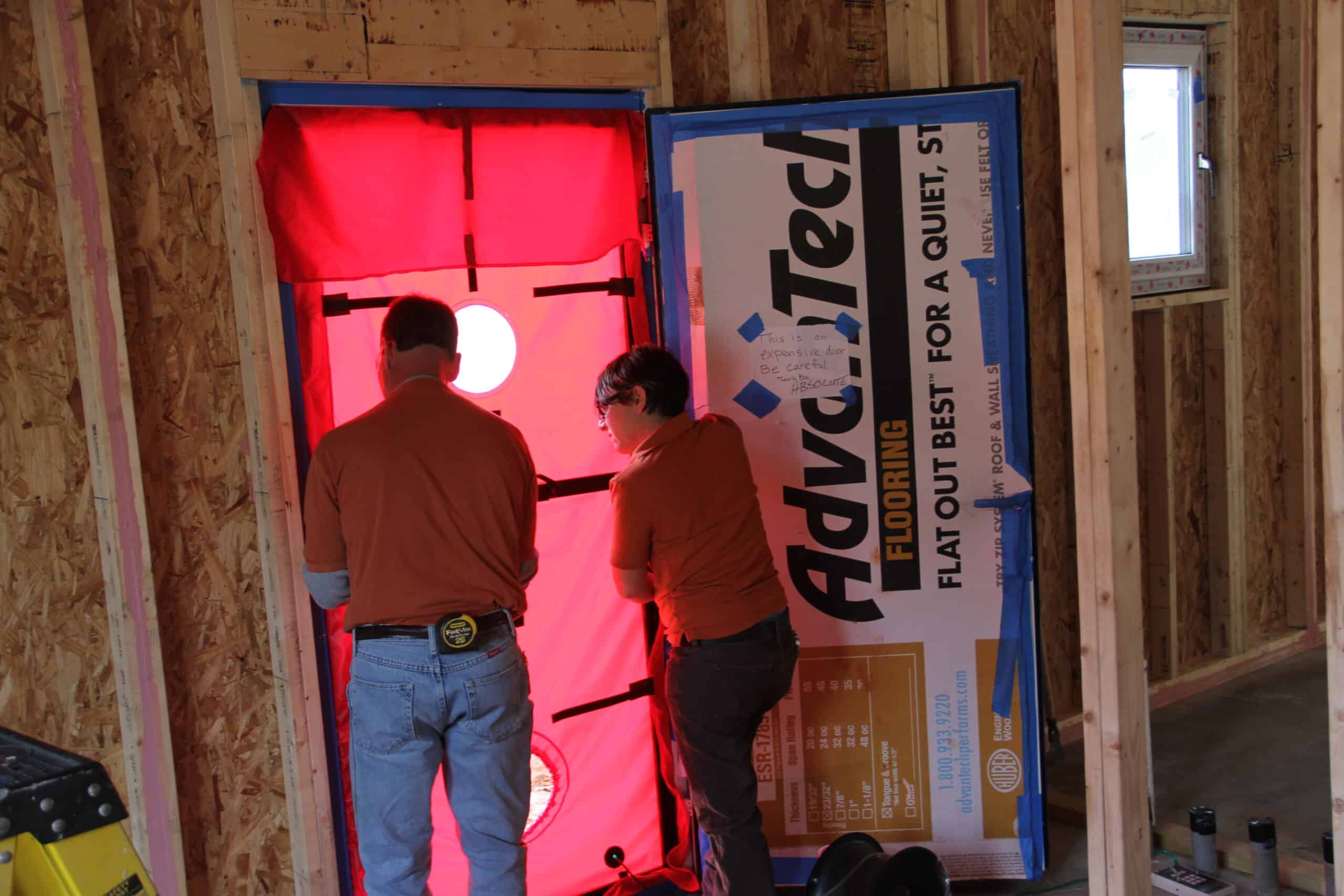
A blower door test is prepared

Air & Water Barriers

Top 5 reasons why buildings fail blower door tests (and how to spec against them)

By Chris Tobias For years, building enclosure performance was judged largely by observation. If the weather barrier appeared continuous and the building stayed dry, the project was considered a success. Today, that's no longer enough. Whole-building blower door testing has transformed airtightness from a design intention into a measurable performance[…]

Air & Water Barriers

Three things architects should ask about their air barrier before the next job

The air barrier is rarely the star of the show or an exciting talking point at a ribbon-cutting ceremony. There it sits, invisible behind the cladding, feeling underappreciated yet taking on work like an absolute beast: escorting vapor molecules out of the building, optimizing HVAC efficiency, ensuring energy metrics are[…]