
A patio can look clean and still hold stains. Oil, rust, organic growth, and cleaner residue can remain in paver texture and joints after a quick rinse. Knowing how to clean patio pavers starts with identifying the paver material, matching the cleaner to the stain, and rinsing the surface before residue dries back into the texture and joints.
How to Clean Patio Pavers Step by Step
Start by clearing the surface and sweeping away loose debris. Then pre-wet the pavers, apply a compatible cleaner, scrub where needed, and rinse before the cleaner dries. Patio paver cleaning works best when the paver face, joints, edges, nearby landscaping, and any existing sealer are considered before cleaner is applied.
Prepare the Patio Before Applying Cleaner
Clear the patio completely before cleaning. Move furniture, grills, planters, rugs, and loose accessories so the cleaner can reach every paver, then sweep away loose soil, leaves, mulch, and grit with a stiff outdoor broom. If weeds or moss have grown between the pavers, remove them before applying cleaner so roots and organic material do not hold residue in the joints.
Wet pavers can become slippery, and stronger cleaners require basic protection, so wear gloves, eye protection, and slip-resistant footwear before application begins. Once the surface is clear, the remaining discoloration is easier to diagnose because dirt can make an oil spot look larger than it is, leaf residue can hide early organic growth, and white mineral deposits can look like general fading until the patio has been swept and rinsed.
Match the Cleaner to the Paver Material and Stain
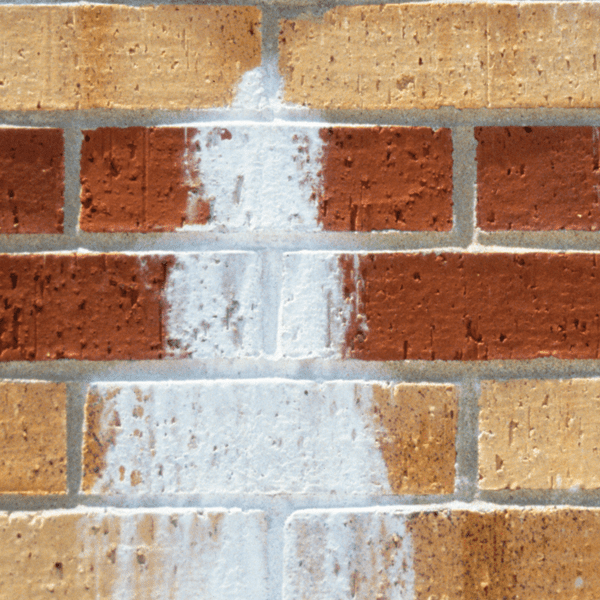
Start with the paver material, then match the product to the stain source because concrete pavers, concrete brick, manufactured stone, clay brick, and natural stone do not all respond the same way to cleaning chemistry.
Check Surface Compatibility First
Some surfaces can tolerate acidic cleaners when the product is designed for that substrate and used according to the product directions. Sensitive natural stone, sealed pavers, and unknown coatings require more caution and a small test area before broader cleaning.
Light soil may respond to mild detergent and water. Rust, efflorescence, atmospheric staining, and embedded surface soiling may require a compatible masonry cleaner selected for that substrate.
Pre-Wet Before Applying Masonry Cleaner
Pre-wet the patio before applying most masonry cleaners. Water helps control how the cleaner contacts the surface and keeps dry pavers from pulling cleaner too deeply into the surface. It also helps prevent the cleaner from flashing dry too quickly on a warm or windy day.
Use Mild Detergent for Light Soil
For routine paver cleaning, a mild detergent and water may be enough when the surface only has loose soil or light grime. Apply the solution, scrub with a stiff nylon or masonry-safe brush, and rinse thoroughly with clean water.
Avoid wire brushes because they can scar or discolor many paver surfaces and can leave metal particles that later rust. Vinegar is acidic, so it should not be treated as a universal patio paver cleaner, especially on natural stone, sealed surfaces, or pavers with unknown coating history.
Use Compatible Masonry Cleaners for Stubborn Staining
When common construction staining, atmospheric dirt, rust, mud, or light mortar smears affect compatible concrete, concrete brick, manufactured stone, custom masonry, or decorative pavers, Light Duty Concrete Cleaner may be the right product to consider. It is an acidic cleaner, so selection should still begin with substrate compatibility, product directions, and a test area. On the right surface, the cleaner can help remove staining without changing the surface texture.
Heavier staining needs a cleaner matched to the surface profile and the material held in that texture. Textured masonry and concrete surfaces can hold embedded dirt, heavy efflorescence, rust, mortar residue, and other staining material in the surface profile. Custom Masonry Cleaner is designed for textured custom masonry surfaces and belongs in a controlled cleaning process with the rinsing method specified by the product directions. That surface-specific approach keeps the process controlled and helps loosened soiling rinse cleanly from the paver texture.
Clean Patio Pavers Without a Pressure Washer
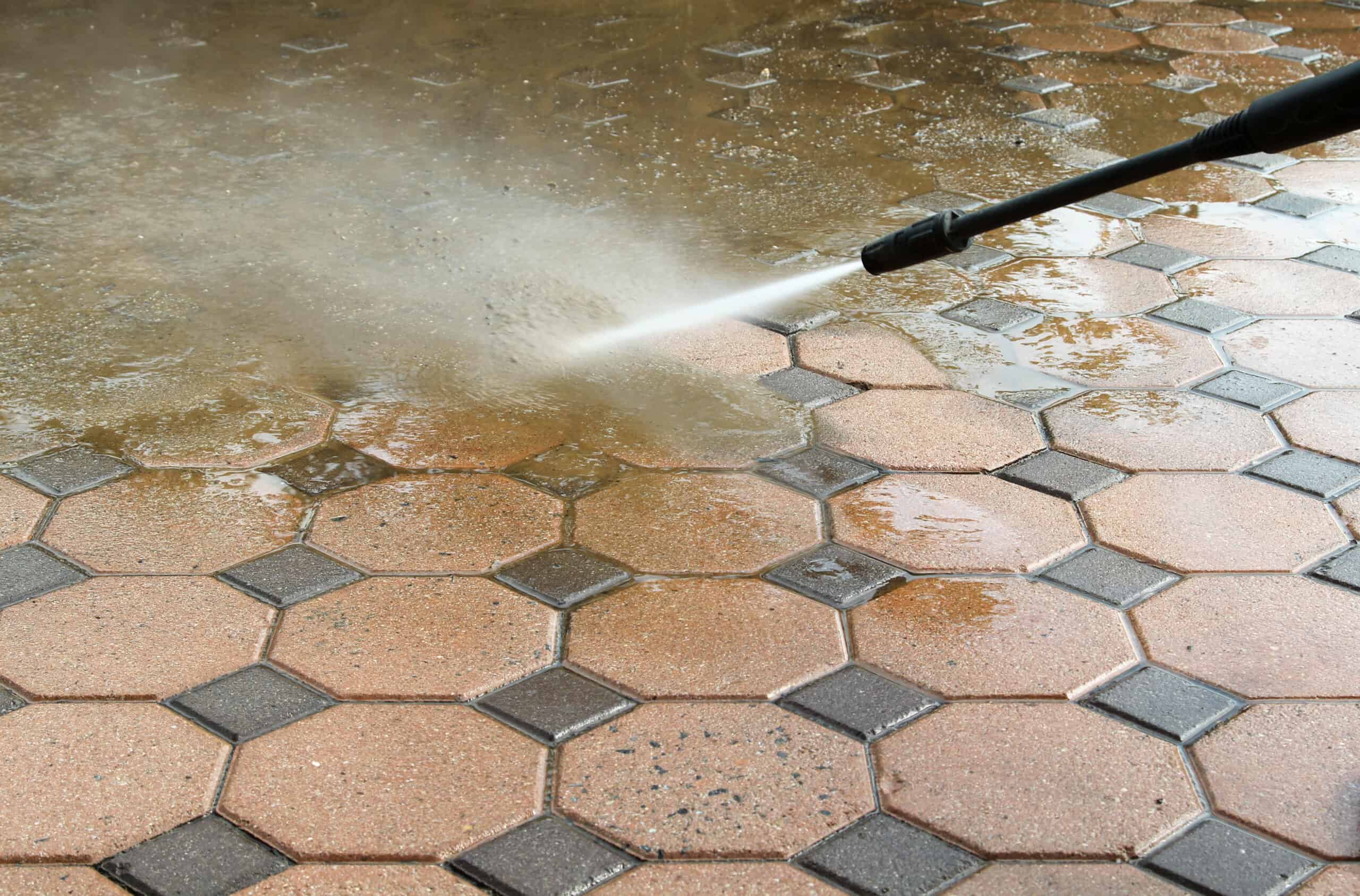
How to clean patio pavers without a pressure washer comes down to control. Work in smaller sections, use a compatible cleaner, scrub steadily, and rinse each area before residue dries. This method takes more physical effort than power washing, but it gives better control around joint sand, edges, planting beds, and older pavers.
Dwell time matters because cleaners need contact time to loosen staining. That does not mean the cleaner should sit until it dries. Dry cleaner residue can resettle on the surface, leave streaking, or make rinsing more difficult.
Treat Common Patio Paver Stains Separately
Different stains need different cleaning methods because they come from different sources and interact with the paver surface in different ways.
Oil and Grease
Oil and grease stains should be treated separately from general paver cleaning. Oil can penetrate porous paver surfaces and continue to darken the area after the patio has been rinsed. Scrubbing the entire patio with a general cleaner may lighten surrounding dirt while leaving the oil spot visible.
A targeted degreasing approach is usually more appropriate, and the cleaning area should be controlled so oil residue is not spread across clean pavers. Surface oil and deeper-set grease conditions often need different treatment steps, so the stain should be evaluated before trying to remove oil stains from pavers.
Organic Growth
Organic growth should be evaluated separately. Algae, mildew, moss, and leaf staining often develop where patios stay damp, shaded, or covered by planters and furniture. Removing the growth is only part of the work.
The cleaner, brush pressure, and rinse pattern should remove loosened material from the paver texture and joints so the patio does not dry with a green or brown film still present. If the same area stays shaded and wet, routine sweeping and faster leaf removal can reduce recurring buildup.
Efflorescence
Efflorescence is not simply dirt sitting on the paver face. It appears when soluble salts migrate to the surface and leave a white deposit as moisture evaporates. Cleaning may remove the visible deposit, but the condition can return if moisture continues moving through the paver or base materials.
A cleaner selected for efflorescence must be compatible with the paver surface and rinsed thoroughly. If dissolved material dries back into the surface, the patio can still show residue after cleaning.
Rust
Rust staining can come from metal furniture, irrigation, fertilizer, tools, or nearby fixtures. The stain source should be removed or corrected before cleaning, or the discoloration can return. Cleaner selection matters because rust removal often involves acidic chemistry, and acidic products need surface compatibility checks.
Test first, protect nearby metals and landscaping, follow the dilution instructions, and rinse the area completely. Rust removal should be controlled so the cleaning process does not create new marks on adjacent surfaces.
Avoid Damage During Patio Paver Cleaning
Cleaning should preserve joint stability, surface texture, landscaping, and nearby materials.
Pressure Washing
When deciding how to clean patio pavers, avoid treating pressure washing as the default answer. Pressure can remove loose dirt quickly, but excessive force can displace joint sand, cut into vulnerable surfaces, disturb edges, or force water into areas where it does not belong.
If pressure-water rinsing is part of the product instructions, use the pressure needed for rinsing and residue removal rather than aggressive surface blasting. The goal is to clear the cleaner and loosened material from the paver, not erode the surface or empty the joints.
Joint Sand
Joint sand needs attention after cleaning. Scrubbing, hose rinsing, and pressure-water rinsing can move sand from between pavers, especially in older patios or areas with wide joints. After the surface dries, inspect the joints and replace sand where needed with a compatible joint material.
If the patio uses polymeric sand, follow the sand manufacturer’s instructions for cleaning, replacement, surface removal, and activation. Different joint materials respond differently to water and cleaning force.
Adjacent Surfaces
Adjacent surfaces should be protected before stronger cleaners are applied. Glass, metal, painted trim, wood, plants, and nearby concrete or stone may react differently than the patio pavers. Wetting adjacent landscaping, covering sensitive materials, and controlling runoff can prevent a small cleaning project from creating a new stain or surface problem.
Maintain Patio Pavers After Cleaning
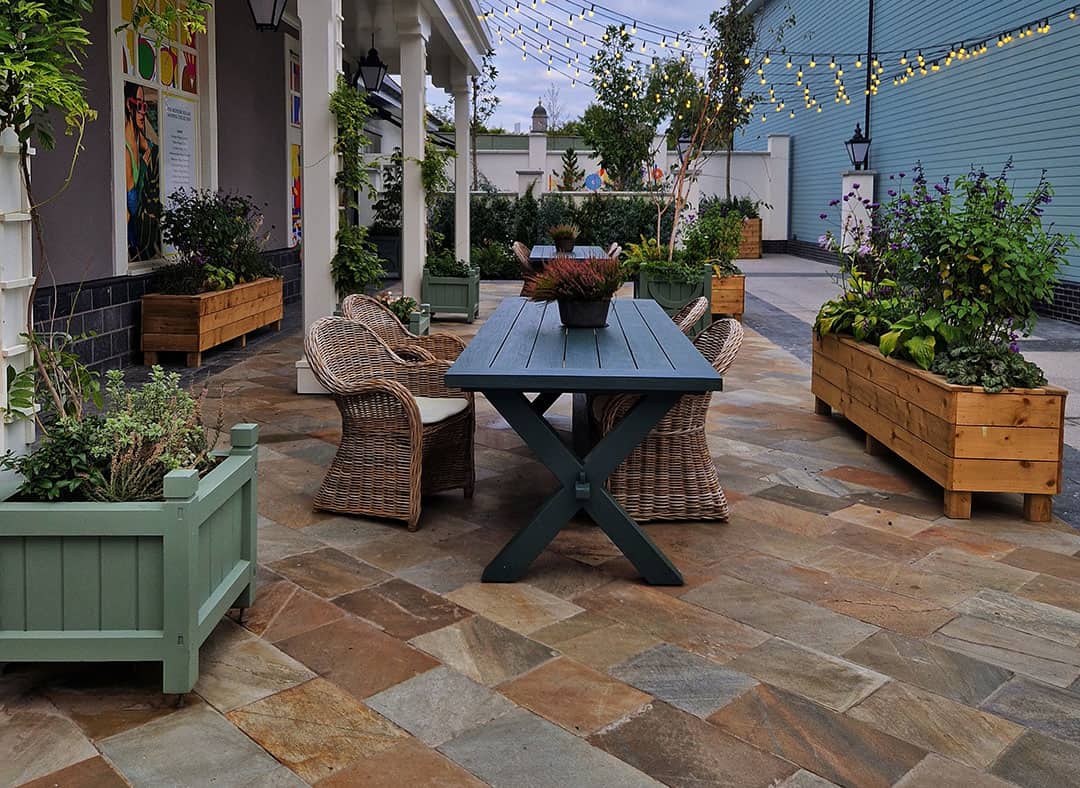
A practical answer to how to clean patio pavers should also include the step after rinsing. Let the patio dry fully before moving furniture and planters back into place. Drying reveals stains that remain, rinse marks that need correction, and joints that need more sand.
Routine maintenance keeps soil, leaves, and spills from becoming the next cleaning problem:
- Sweep leaves before they hold moisture against the surface.
- Clean spills before they settle into the paver face or joints.
- Move planters occasionally so the same shaded ring does not stay wet for long periods.
- Evaluate whether a compatible protective treatment makes sense for the surface, exposure, and desired appearance.
A consistent patio maintenance plan helps reduce recurring staining without relying on harsher cleaning later. After each deeper cleaning, inspect the surface, joints, and remaining stains before deciding whether another treatment is needed.
Match the Right Cleaner to Your Patio Paver Surface
Surface-specific paver cleaning starts with the right product. PROSOCO’s hard surface care products give homeowners, contractors, and maintenance teams cleaner-specific options for compatible concrete, masonry, manufactured stone, and decorative paver surfaces. Contact us today for help selecting the right product for your patio paver cleaning project.
FAQ
What is the best way to clean patio pavers?
The best method is to sweep away loose debris, identify the paver material, pre-wet the surface, apply a compatible cleaner, scrub where needed, and rinse before the cleaner dries. Stains such as oil, rust, efflorescence, and organic growth should be treated according to the stain source.
Can you clean patio pavers without a pressure washer?
Yes. Work in small sections, use a compatible cleaner, scrub with a stiff nylon or masonry-safe brush, and rinse thoroughly with a garden hose before residue dries.
What should you use to clean pavers?
Light soil may only require mild detergent and water. Rust, efflorescence, atmospheric staining, mortar residue, and embedded soiling may require a masonry cleaner selected for the paver material and stain type.
Can vinegar damage patio pavers?
Vinegar is acidic, so it should not be treated as a universal cleaner. Natural stone, sealed pavers, unknown coatings, and sensitive materials should be tested carefully before any acidic cleaner is used.
How often should patio pavers be cleaned?
Routine sweeping should happen as needed, especially after leaves, soil, spills, or organic debris collect on the surface. Deeper cleaning depends on exposure, shade, staining, traffic, and how quickly buildup returns.