
Concrete fails in familiar ways: the thin cement-rich surface layer (often called paste) breaks down, moisture cycles open and close pores, and traffic grinds away the top. Beneath that wear, the substrate often remains sound enough for concrete resurfacing if it can still hold a bonded repair. Those conditions guide contractors, facility teams, and homeowners alike, because every successful resurfacing project depends on how the slab behaves under actual moisture, temperature, and load conditions before any new material goes down.
What Concrete Resurfacing Requires Before Work Begins
Concrete typically deteriorates at the surface while the base remains intact. Successful resurfacing depends on direct contact with solid concrete that can support mechanical and chemical adhesion. Early decisions hinge on how the slab has been used, how it dries after weather, and whether those patterns have begun to undermine the surface.
Assessing Whether a Slab Can Be Resurfaced
Light scaling, shallow pits, worn texture, or hairline cracking often indicate a slab suitable for concrete resurfacing. The key question is whether the layer below moves under load. Signs like deep structural cracks, rocking sections, or hollow spots usually mean the deterioration runs too deep for a new surface layer. Crews probe and tap the surface to locate unstable zones, simple checks a homeowner can mirror with a broom handle to identify shifting or separation.
Cleaning and Surface Preparation
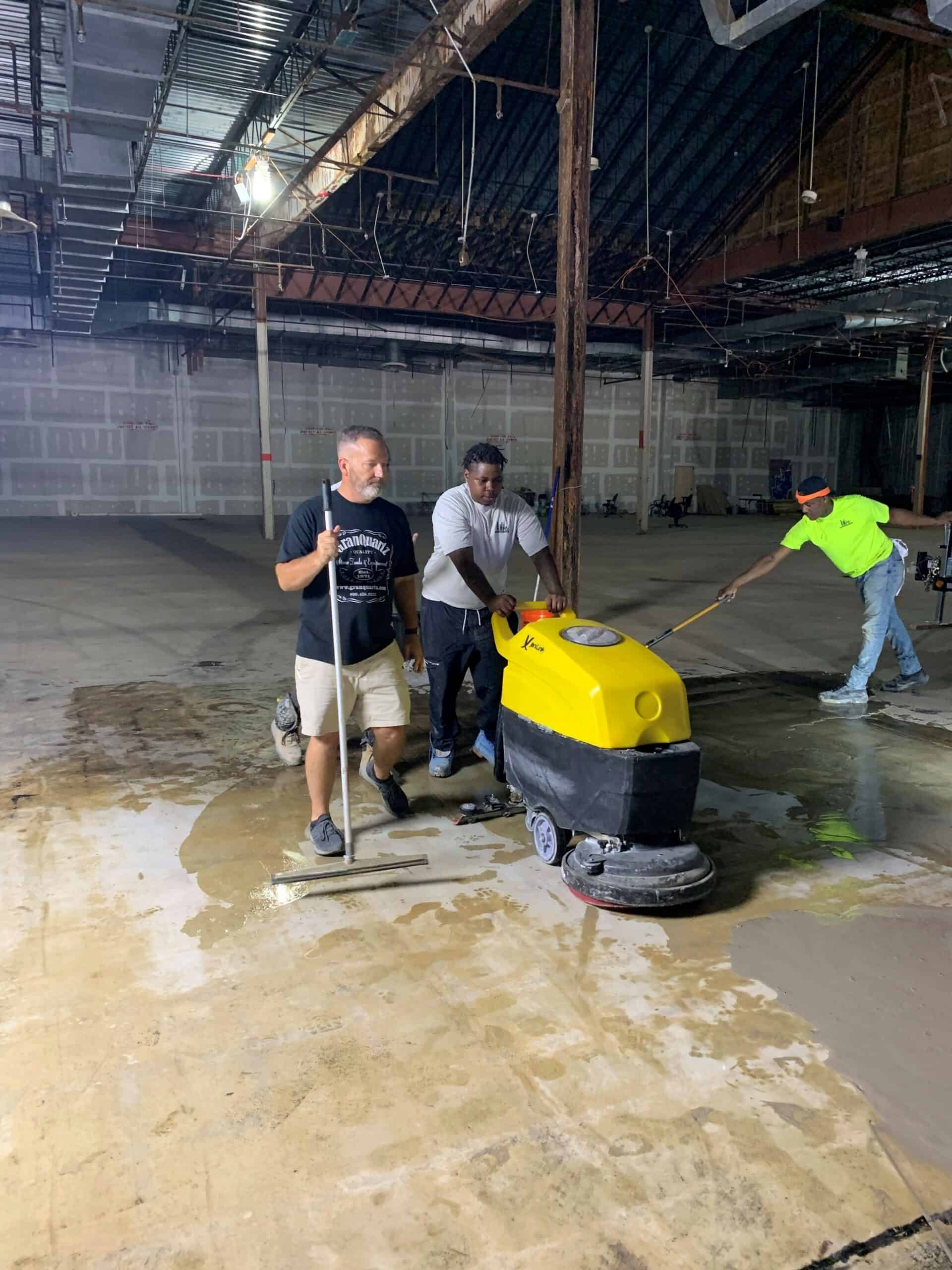
Effective resurfacing starts with preparing the existing concrete in three stages: thorough cleaning, targeted repairs, and mechanical profiling of the surface.
Remove Contaminants and Weak Surface Cement
Cleaning governs adhesion because contaminants settle into pores and interfere with bonding unless they’re lifted or dissolved. Degreasers and specialty cleaners remove residues that block wetting or hydration. Any softened or delaminated cement must be cut back to solid concrete so the resurfacer bonds only to material that can carry load. Homeowners often see darker wet spots or uneven drying during cleaning that reveal areas needing attention.
Contractors often use PROSOCO concrete cleaners formulated to lift oils, staining, and embedded residues so the resurfacer bonds to uncontaminated concrete.
Repair Cracks, Spalls, and Voids
Cracks and shallow voids must be filled with repair materials that cure to compatible hardness, preventing dips or telegraphed patterns in the new surface. Each repair must cure fully before profiling begins so the mechanical texture remains uniform across the slab.
Create a Uniform Mechanical Profile
Grinding, scarifying, or shot blasting exposes stronger concrete and creates a profile the resurfacing layer can anchor to. A clean, consistent texture reduces bond weakness and uneven curing. Dust removal is essential because even a thin film can interfere with adhesion. For homeowners, this stage often feels similar to sanding before refinishing: preparation sets the performance of the final surface.
Where surfaces show variable hardness after profiling, PROSOCO densifiers are sometimes applied to help stabilize abrasion resistance before protective treatments go down.
Managing Site and Environmental Conditions
Concrete absorbs and releases moisture based on humidity, temperature, and sun exposure. A slab that dries too quickly draws moisture from the resurfacer; a slab that stays wet interferes with curing. Most resurfacers require damp but not saturated concrete.
Uneven drying on hot days signals the need for smaller batches or adjusted timing, while cold conditions slow hydration. Hot, breezy conditions reduce working time, so installers adjust batch size and sequencing to keep the mix workable. These moisture and temperature swings shape resurfacing outcomes in both residential and commercial settings.
Mixing and Placing the Resurfacer
Once the slab is ready and site conditions are stable, resurfacing moves into two critical steps: mixing the material correctly and placing it in a controlled, predictable sequence.
Mix the Material for Predictable Hardening
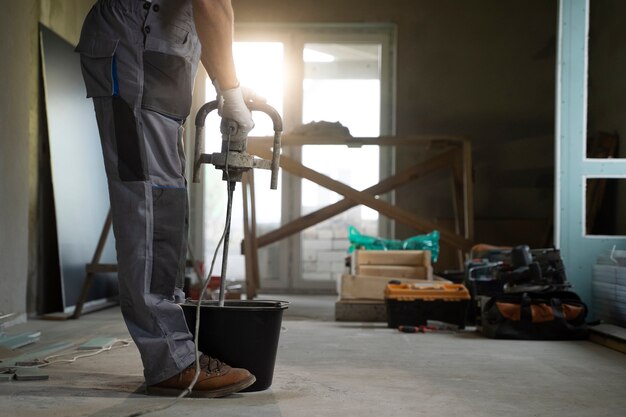
Mixing controls flow, strength, and open time. Consistent water ratios produce even curing and hardness across the slab. Under-watering stiffens the material; over-watering weakens the surface and increases shrinkage. Letting the mix rest releases trapped air, and remixing blends cement and polymers evenly. Because resurfacers hydrate quickly, batching must match the pace the crew can place and finish.
Place the Resurfacing Layer in Controlled Sections
Placement begins by dampening the slab so moisture is not pulled from the mix. The resurfacer is poured, pulled into a thin layer, and shaped to follow the existing profile. Edges and transitions dry faster, so they require careful timing to avoid visible seams or cold joints. As the material tightens, installers apply a finish suited to use, broom finishes outdoors and lighter troweling indoors. Overworking brings excess water to the surface and weakens the finish.
Curing and Protecting the New Surface
Curing determines long-term durability. Hydration must occur under stable moisture and temperature conditions to prevent shrinkage cracks or weak spots. The slab must be protected from traffic, wind, and direct sun while strength develops. Foot traffic can begin once early hardness forms, but rolling loads and vehicles require more time. Homeowners who keep resurfaced areas off-limits for the first few days avoid most early failures crews get called back to fix.
Post-Application Treatments and Long-Term Performance
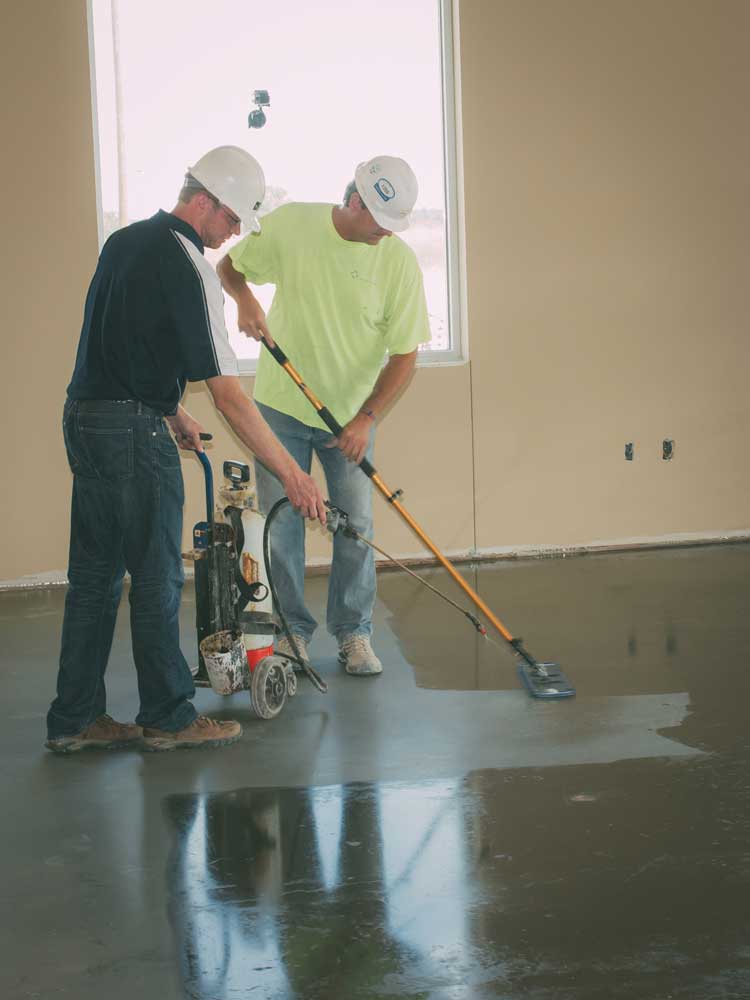
Once concrete resurfacing cures, densifiers from PROSOCO can increase abrasion resistance and harden the concrete, while water-repellents help manage moisture absorption that frequently leads to staining, freeze-thaw damage, or seasonal darkening. Residential slabs often show more even drying and fewer dark, patchy areas after rain when protected.
When Resurfacing Requires More Extensive Preparation
Older slabs may be covered with coatings, paints, or embedded contaminants that require mechanical removal before resurfacing. Grinding or blasting exposes varying degrees of hardness or porosity that must be profiled evenly across the entire surface. A uniform mechanical profile remains one of the strongest predictors of long-term new surface layer performance.
Matching Resurfacing to Interior and Exterior Conditions
Interior floors see chemical exposure, rolling loads, and frequent cleaning, which guide mix and finish selection. Moisture-prone areas benefit from treatments that reduce absorption and strengthen the surface. Exterior slabs face sun, water, and freeze-thaw cycles that stress the new surface layer, so bond strength and protective treatments matter. Homeowners often see these effects on patios, pool decks, and sloped driveways where water, sun, and foot traffic converge.
When Concrete Resurfacing Will Not Work
Deep cracks, substrate movement, delamination, and active moisture intrusion prevent successful resurfacing. These conditions must be identified early because no resurfacer can compensate for unstable concrete. When prep, placement, and curing line up with real site conditions, the new surface layer delivers predictable results on residential and commercial slabs alike.
PROSOCO Products Support Concrete Cleaning And Resurfacing
We provide professional-grade cleaners, sealers, densifiers, and water-repellents for concrete surface preparation and long-term protection. We can help you select products that match your slab’s conditions and performance expectations. Contact us today for project-specific product recommendations or technical guidance for concrete cleaning and resurfacing.